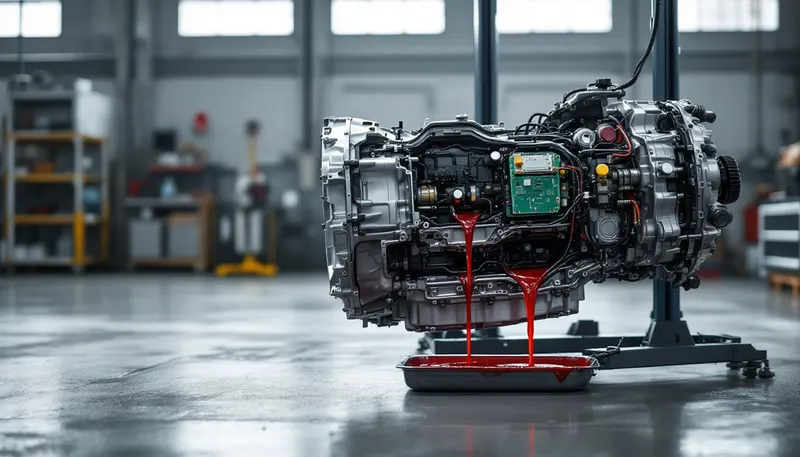
722.9 7G-Tronic Transmission Service and Repair
Conductor plate, valve body, fluid service, coding
- Price range
- $350–$3,200
- Typical time
- 2–8 hours
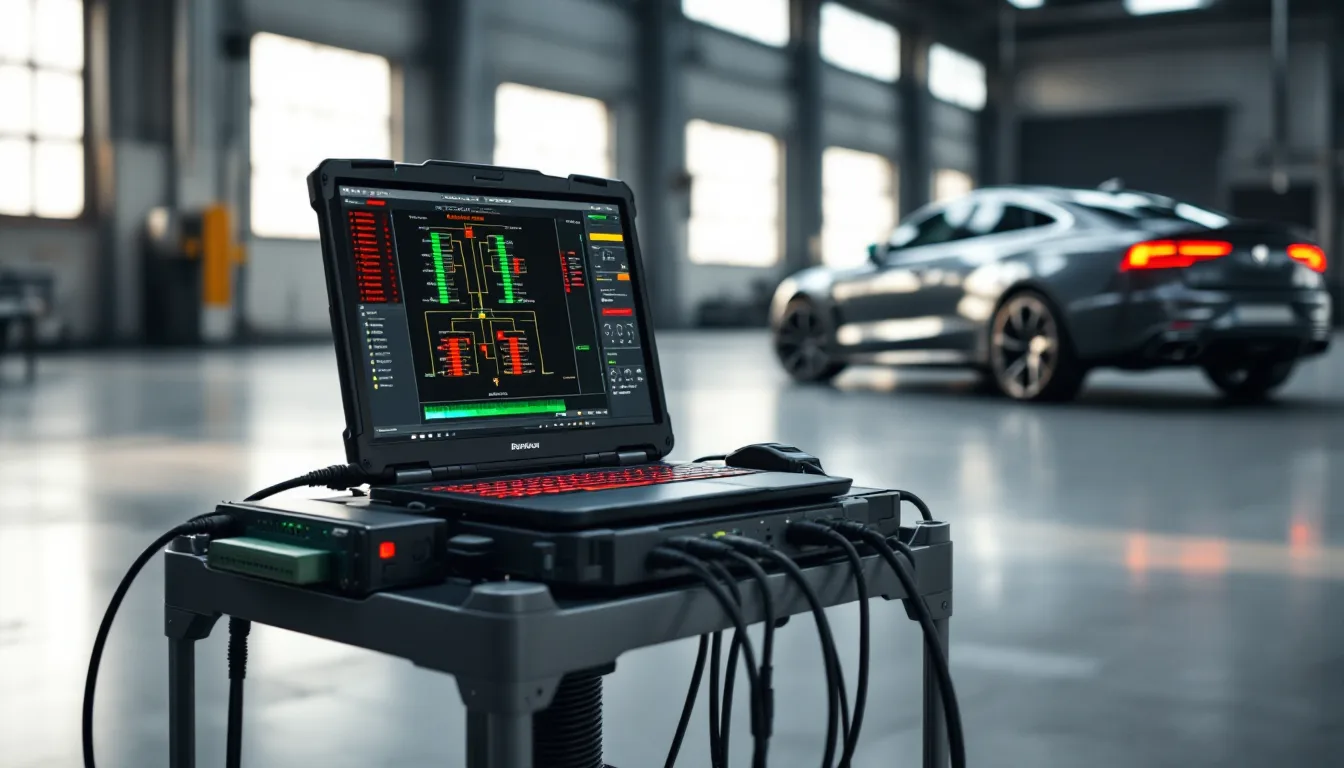
$149–$229 · 1–1.5 hours
The XENTRY / DAS platform the factory network uses, run by an independent shop, so the fault is named before any part is ordered.
Repairs covered by a 2-year/24,000-mile warranty, independent shop
Symptoms
Problem
Check engine light, P0016 or P0017
Likely cause
Cam timing deviation: balance shaft on 2005–2008 M272/M273, adjusters on M276/M274
The fix
Guided timing test and chain stretch measurement
Problem
Stuck in one gear, P0717 or P0718
Likely cause
722.9 conductor plate speed sensor, or a supply fault
The fix
Sensor data read before a plate is ordered
Problem
Random faults across unrelated modules
Likely cause
Weak main or auxiliary battery under load
The fix
Load test both, clear and re-test
Problem
Tail lights and trunk release dead together
Likely cause
Rear SAM output fault or water at its connector
The fix
SAM actuation test, repair or coded replacement
Problem
Key turns, no crank
Likely cause
EIS not releasing the ESL, or an FBS authorization fault
The fix
EIS and ESL diagnosis, repair or emulator with coding
XENTRY is the diagnostic platform Mercedes-Benz builds for its own workshops. It speaks to every control unit on the car, from the engine and transmission modules to the SAM units, the EIS, the Airmatic or ABC controller, the airbag module and the seat and door electronics. A parts-store scanner reads the engine module through the OBD port and little else.
The difference shows in the detail. A generic tool shows P0717. XENTRY shows the same fault as a speed sensor implausibility inside the 722.9 conductor plate, with the frequency, the oil temperature, the gear and the road speed at the moment it was stored. The first says the transmission has a problem. The second says which part and under what conditions.
We run XENTRY / DAS with the online SCN coding subscription, and a J2534 pass-through interface with the OEM software subscription for cars that need the newer flash procedures. Both are current releases.
The session starts with a conversation, because the way a fault presents matters. When does it happen, cold or hot, at what speed, after a battery disconnect or a repair somewhere else. Then the car is connected and a quick test polls every module; the result is a map of stored, current and intermittent faults across the whole vehicle.
From that map we isolate the system that matters and run the guided test XENTRY provides for it. Guided tests step through measurements and actuations in the order the factory engineers specified: command the Airmatic valve block open and watch strut pressure, cycle the 722.9 solenoids, pulse the fuel injectors one at a time and watch the smoothness values. Where the data points to a connector or a wire, we go to it with a meter.
Most sessions conclude within the 1–1.5 hour window; a fault that needs the car driven to reproduce, or a wiring fault buried in a harness, takes longer, and we say so before the time runs past the quote.
Anything on the chassis bus. Airmatic and ABC need the level sensors read and the pressures calibrated, which is a XENTRY routine. SBC on the W211, R230 and C219 cannot be bled, deactivated or have its counter read without it. The EIS and ESL on a W204, and the FBS3 and FBS4 immobilizer logic generally, are invisible to a generic tool.
The 722.9 conductor plate is the common example. The generic code says speed sensor; XENTRY shows which of the two sensors, the sensor supply voltage, and the adaptation values that tell us whether the valve body has been compensating for wear. Replacing the plate also requires coding, which is not possible without the factory system.
Body electronics round it out. A rear SAM fault that takes out the tail lights and the trunk release, a seat module that will not learn its positions, a door control unit that reports a window as not normalized, each of these is a five-minute read in XENTRY and a day of guessing without it.
SCN stands for software calibration number. When a replacement control unit is installed, or a component with its own coding such as a conductor plate, a SAM or an EIS, the module must be told which car it lives in: engine, transmission, market, options, emissions calibration. Mercedes delivers that configuration online from its servers, matched to the VIN, and writes it through XENTRY.
Without SCN coding a new module either refuses to work or works with the wrong map. A used 722.9 plate from another car keeps that car's adaptation and may not talk to yours at all. A new ESL does nothing until it is married to the EIS. This is why some repairs cannot be completed by a shop without the online subscription, no matter how good their hands are.
We use the same channel for software updates where Mercedes has published a revised calibration, for example the 722.9 shift software releases that address harshness on certain years.
Intermittent faults are a matter of data, not luck. XENTRY stores event environment data for most codes, so even a fault that cleared itself leaves a record of the conditions that caused it. We read the frequency counter, the first and last occurrence and the conditions at both, which often tells us whether the trigger is heat, vibration, voltage or load.
When that is not enough, we record. XENTRY and the pass-through tool can log live data from a selected module during a road test, so a transmission flare that only happens on a warm 2-3 upshift under light throttle, or an Airmatic pressure drop that only shows on Interstate 30 expansion joints, is captured with a timestamp.
Voltage is the first suspect on any Mercedes with a random pattern of unrelated faults. A main or auxiliary battery that drops under load makes modules reset and set codes that have nothing to do with each other. We load-test both before chasing anything else.
A camshaft timing code such as P0016 means three different things depending on the engine. On a 2005–2008 M272 or M273 it points first to the balance shaft sprocket or idler gear wear that stretches the chain and changes cam timing. On an M276 or M274 it points to the camshaft adjusters themselves. On an M271 in a W203 or W204 it is usually chain stretch with a worn tensioner.
The same applies to misfires. An M156 AMG V8 misfire has a different short list than an M276 misfire, and an OM642 diesel rough idle sends us toward swirl flaps and injector seals before plugs or coils. XENTRY gives the data; knowing the engine family is what turns the data into a diagnosis, and it is why our workload is this one brand. The same timing code on an M274 in a W205 points first at the adjusters and the chain tensioner, a far smaller repair than a balance shaft.
You receive a written report: the faults found, the environment data that mattered, the test results and the root cause in plain language. If a repair is needed, the same sheet carries the repair as a range, with the parts named, so the decision is yours with the facts in front of you. It also notes anything else the quick test turned up that is not urgent yet.
The diagnostic fee, $149–$229 depending on time, covers the diagnosis itself. Complex electrical tracing or a second session after a repair elsewhere is quoted before it starts. Repairs that follow are quoted separately and carry 2 years parts and 2 years labor, up to 24,000 miles, nationwide. If you want a dealer or another shop's finding read a second time, email service@mercedesbenzrepair.net and bring the printout.
Diagnostics is labor and software time, so the price depends on how long the fault takes to isolate. A clear stored fault with one guided test lands at the bottom of the range; a road-test recording or a wiring trace lands at the top.
The tools are current XENTRY / DAS with the SCN online subscription and J2534 pass-through with the OEM subscription. Replacement modules are genuine Mercedes or the original-equipment supplier's part, because a module that cannot accept SCN coding fixes nothing.
We do not sell parts on the strength of a code number; if the data points to wiring or a battery, that is what the report says.


Pricing
| Service | Price range | Typical time |
|---|---|---|
| XENTRY diagnostic session with written report | $149–$229 | 1–1.5 hours |
| 722.9 adaptation reset | $120–$180 | |
| SBC counter reset only | $120–$180 | |
| Replacement key cut and programmed | $350–$650 |
Dallas-area independent figures. Time on the car sets the diagnostic price; any repair it leads to is quoted on its own sheet.
The offer
Risk reversal
Covered for 2 years parts and 2 years labor, up to 24,000 miles, nationwide
No deposit, no card online: you approve the written range before any part is ordered
Published range
$149–$229
1–1.5 hours
Models
Questions
We can clear a fault, but one with a cause returns within a drive cycle or two, and clearing it erases the freeze-frame data that would have told us why it set. If you simply want the light off, we still read and record the fault before clearing it.
We run XENTRY / DAS with the online SCN coding subscription, the platform Mercedes-Benz workshops use for diagnosis and coding, plus a J2534 pass-through with the OEM software subscription for newer flash procedures. That covers guided tests, actuations and VIN-matched coding from the W202 era to current cars.
Not yet. P0717 says an input speed signal was implausible, not why. On a 2004–2010 722.9 the conductor plate is the likely cause, but a low battery, a wiring fault at the 13-pin connector or fluid contamination can set the same code. XENTRY shows the sensor data and adaptations first.
Yes. Both platforms are fully supported, including the SRS module, the ESP and SBC units, the Airmatic controller, the SAM units and the EIS. Older cars with the 38-pin connector under the hood are covered with the correct adapter, so a 1990s W210 or W202 reads the same way.
No. A worn brake pad or a visibly leaking valve cover gasket does not need an hour on XENTRY. Any warning light, driveability complaint, suspension fault or electrical problem does, because guessing on a Mercedes is expensive. A diagnosis from another shop can be verified in a shorter session.
The stored event data records the conditions when the fault last set, and we can leave a logger connected on a road test or over a few days of normal driving. Intermittent faults are solved by evidence, and the report shows what we found either way.
Related
Conductor plate, valve body, fluid service, coding

Steering lock, ignition switch and key programming
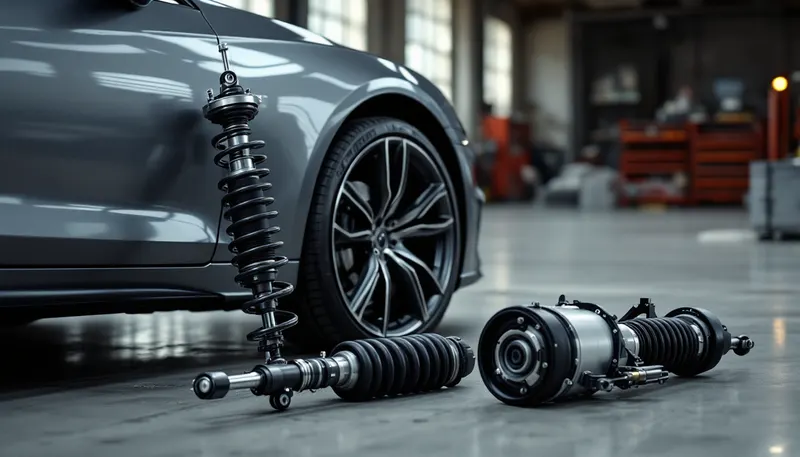
Air struts, compressor, valve block, leak tracing
Book XENTRY Diagnostics in Dallas
Factory XENTRY / DAS diagnostics for every Mercedes-Benz control unit: quick test, guided tests, actuations, live data and SCN online coding, ending in a written report and repair range.