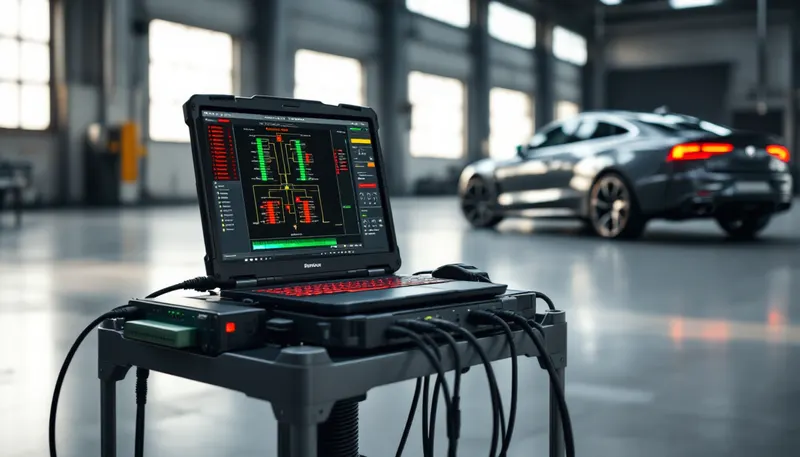
XENTRY Diagnostics
Factory XENTRY scan, guided tests, SCN coding
- Price range
- $149–$229
- Typical time
- 1–1.5 hours
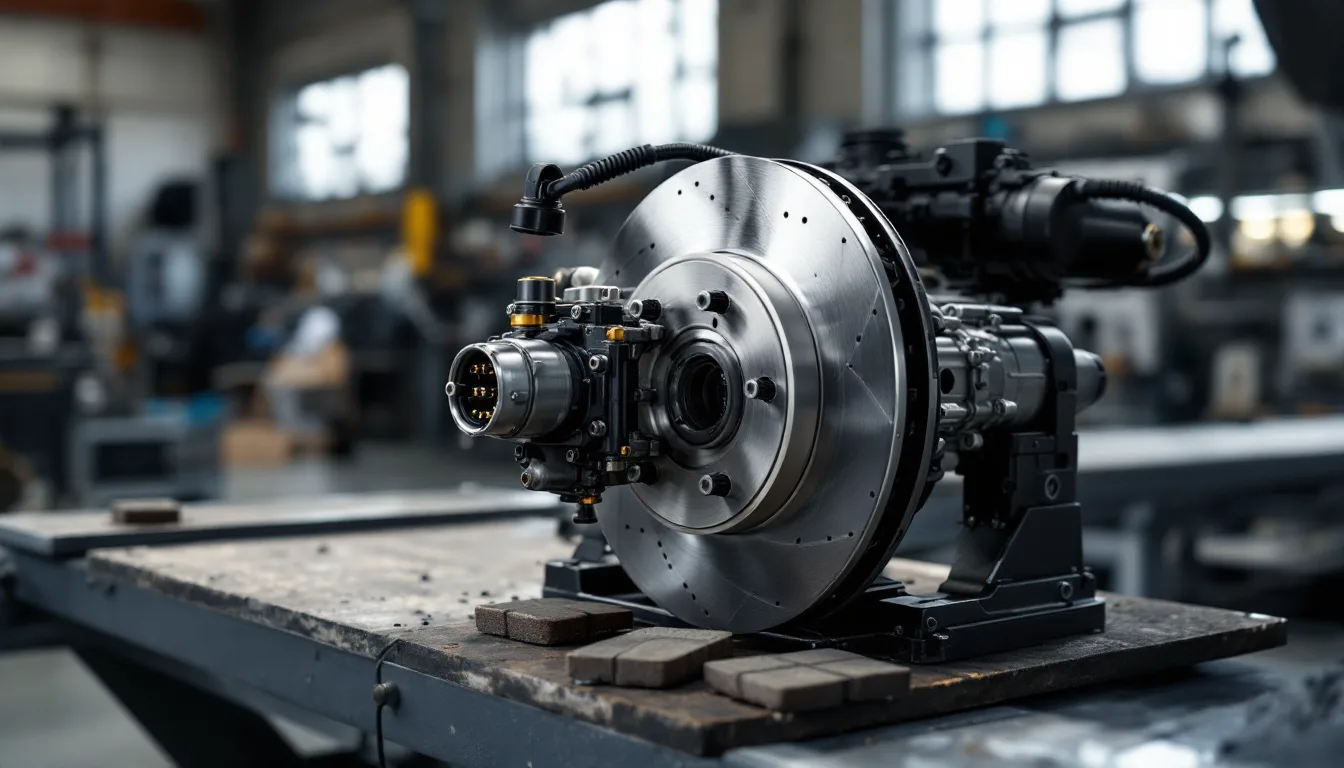
$450–$3,100 · 2–5 hours
Sensotronic Brake Control is the brake-by-wire system on the W211 E-Class, R230 SL and 2006 CLS. When it posts a warning, the fix ranges from a counter reset to a coded hydraulic unit.
Repairs covered by a 2-year/24,000-mile warranty, independent shop
Symptoms
Problem
Red warning at every start
Likely cause
Activation counter at its limit or a weak pump
The fix
Read counter and pump data; reset if healthy, replace if not
Problem
Pedal hard, car barely slows
Likely cause
Hydraulic fallback after accumulator pressure loss
The fix
Hydraulic unit with coding and XENTRY bleed
Problem
Pump runs long at idle
Likely cause
Internal leakage in the unit or accumulator
The fix
Run-time test; replace when out of spec
Problem
Brakes drag after pads elsewhere
Likely cause
System was never deactivated for the job
The fix
Clear faults, check pistons, reactivate, road test
Problem
Warning after a jump start
Likely cause
Voltage drop logged as a unit fault
The fix
Battery and charging check, clear, retest
Sensotronic Brake Control is a brake-by-wire system Mercedes-Benz fitted to the W211 E-Class from 2003 to 2006, the R230 SL from 2003 to 2012 and the C219 CLS for the 2006 model year. The pedal does not push fluid to the calipers in normal driving. It moves a travel sensor, and the SBC hydraulic unit, which carries its own pump, high-pressure accumulator and a bank of valves, applies pressure to each wheel individually.
That design gave the cars fast brake response and features like dry braking in rain and soft stop at traffic lights. It also means the hydraulic unit is doing work on every stop and has a finite life, which Mercedes tracked with an activation counter stored in the control unit. When the counter or the pump data hits a threshold, the car asks for a workshop visit.
If you own a W211 built after mid-2006, a W212 or anything later, you do not have SBC; those cars went back to a conventional booster with ESP. The quickest check is the message itself: only SBC cars display 'Service Brake Visit Workshop' in red.
The message is a status, not a diagnosis. The SBC control unit posts it when the activation counter has reached its programmed limit, when pump run time is out of range, or when a fault such as an accumulator pressure drop has been stored. Three very different repairs sit behind the same words, so the first job is reading the unit in XENTRY rather than assuming the worst.
A counter-only trigger on a unit whose pump current, accumulator pressure and run time are all healthy can be reset, and the car will drive normally until the next threshold. A unit with a weak pump will log the message again within days or weeks of a reset. We record the live data before and after so you can see which case you have.
Yellow SBC warnings usually point to wheel speed sensors, a brake light switch or low voltage. We do not quote a hydraulic unit for a yellow light.
The pump motor and the piston seals inside the unit wear with each pressurization cycle. The accumulator is a gas-charged sphere, and the membrane can lose its charge, which forces the pump to run more often and shortens its life further. Brake fluid that has not been exchanged on schedule carries moisture and debris that accelerate valve seat wear.
Age matters as much as miles. The youngest SBC E-Class is now around twenty years old, and the SL ran the system until 2012. Units on low-mileage cars that sat for long periods fail just as readily as those on daily drivers because seals dry out and the accumulator leaks down.
You cannot rebuild the unit in the field. Internal parts are not sold separately, and the control electronics are married to the VIN, so the repair is a new or remanufactured unit with SCN coding.
Yes, and we will say so before writing an estimate. In 2018 Mercedes-Benz extended coverage of the SBC hydraulic unit to 25 years with no mileage limit on the affected cars. That coverage is handled by Mercedes dealers, not by independent shops, and it applies to the hydraulic unit itself, not to pads, rotors or counter resets.
Our XENTRY read tells you whether the unit is actually failing. If it is, take that data and your VIN to a dealer and ask them to process it under the extended coverage. If the dealer declines, or if your fault turns out to be pads, a sensor or a counter rather than the unit, we repair it here at the ranges on this page.
We would rather lose a hydraulic unit job than have you pay for a part Mercedes may still cover.
The session starts with a full read of the SBC control unit in XENTRY: stored faults with freeze frames, the activation counter, pump run time, accumulator pressure build and drop, and brake light switch plausibility. We check battery voltage and the alternator under load, because SBC is sensitive to supply voltage and a tired battery writes faults that look like unit problems.
A pump test follows. XENTRY commands the pump and reports pressure rise time and current draw. A healthy pump reaches target pressure quickly and holds it; a worn one is slow, draws high current or lets pressure bleed off. We also watch the individual wheel pressure sensors while applying the pedal to catch valve problems.
Only then do we write the estimate, with the reading attached so you can compare it with a dealer's or keep it for the extended coverage claim.
The system stores pressure even with the engine off, and a caliper piston can be driven out if someone pushes the pedal or disturbs a line while the unit is live. Before any pad or rotor work, SBC must be deactivated in XENTRY, which vents the pressure and puts the unit in a safe state. It is reactivated and tested after the wheels are back on.
Pads and rotors themselves are conventional, and the ranges per axle sit at $450–$900 depending on whether you need rotors and wear sensors. The W211 and R230 use different rotor sizes by engine, and the AMG versions use composite rotors with a different price band.
A shop that skips the deactivation step is the usual reason an SBC car arrives with dragging brakes and a warning that will not clear after a pad change. We clear the stored faults, verify piston position and road test before releasing the car.
A red warning with normal pedal feel means the system is still operating but has flagged itself; the car should be looked at within days, not months. A hard pedal means SBC has already switched to hydraulic fallback, which gives you front brakes only with a fraction of the normal assist. Stopping distance grows sharply and ABS and ESP are off.
If the pedal is hard, have the car towed rather than driven, and we will read the unit on arrival.
A counter reset with a full health check is a one-hour visit at $120–$180. Pads and rotors per axle, including deactivation and reactivation, take two to three hours at $450–$900. A hydraulic unit replacement with coding and a complete XENTRY bleed is a half-day job at $1,900–$3,100, and we keep the car overnight if the unit must be ordered.
What moves the number is the unit source, new versus remanufactured, whether the brake fluid and bleed are done at the same time (they must be), and whether worn pads are found during the test. Every repair here carries 2 years parts and 2 years labor, up to 24,000 miles, nationwide. For a written estimate with the reading attached, email service@mercedesbenzrepair.net.
SBC hydraulic units come new through Mercedes-Benz parts channels or remanufactured from suppliers who rebuild the pump and accumulator and test to the factory pressure spec. We quote both when both exist for your part number.
Pads are OE or OE-supplier, rotors match the factory size for your engine code, and the fluid is a DOT 4 Plus grade meeting the Mercedes specification, from which SBC tolerates less deviation than a conventional system. Coding labor is in the unit price.


Pricing
| Service | Price range | Typical time |
|---|---|---|
| SBC hydraulic unit replacement with coding | $1,900–$3,100 | 4–5 hours |
| Pads and rotors per axle, SBC deactivated | $450–$900 | 2–3 hours |
| SBC counter reset with pump health check | $120–$180 | 1 hour |
| SBC diagnosis and pump test | $149–$229 | 1 hour |
Ranges move with new versus remanufactured units and rotor sizes by engine. Confirm Mercedes' 25-year SBC unit coverage with a dealer before paying for a unit anywhere.
The offer
Risk reversal
Covered for 2 years parts and 2 years labor, up to 24,000 miles, nationwide
No deposit, no card online: you approve the written range before any part is ordered
Published range
$450–$3,100
2–5 hours
Models
Questions
Mercedes-Benz extended SBC hydraulic unit coverage to 25 years and unlimited miles in 2018 for the affected W211, R230 and C219 cars. A dealer performs that work and it covers the unit only, not pads or resets. We read the unit here and hand you the data before you pay anyone.
Yes, if the pump and accumulator test healthy; the counter is a service interval and resetting a sound unit is legitimate. On a weak pump a reset hides the fault for a few weeks at most. We test first, reset second, and record the pump data on your invoice.
Do not. A hard pedal means SBC is in hydraulic fallback with front brakes only and no ABS or ESP, and stopping distances grow badly. Have the car towed; we read the fault memory on arrival and tell you whether it is the unit, a sensor or voltage.
SBC holds pressure with the engine off, so pads must be changed with the system deactivated in XENTRY. Done live, a piston may be pushed out or a fault stored. We clear the faults, check piston travel at each corner and reactivate, which usually fixes it without parts.
Almost certainly not. Mercedes dropped SBC from the W211 in mid-2006; 2007 and later E-Class cars use a conventional booster with ESP. The R230 SL kept it through 2012 and the C219 CLS had it for 2006 only. Your VIN and build date settle it.
The brake fluid is renewed and the system bled through XENTRY, because the unit will not self-bleed and air triggers faults immediately. We also check pad thickness, since a fresh unit on worn pads means another visit soon, and test the battery, which must be sound for coding.
Related
Factory XENTRY scan, guided tests, SCN coding
Air struts, compressor, valve block, leak tracing
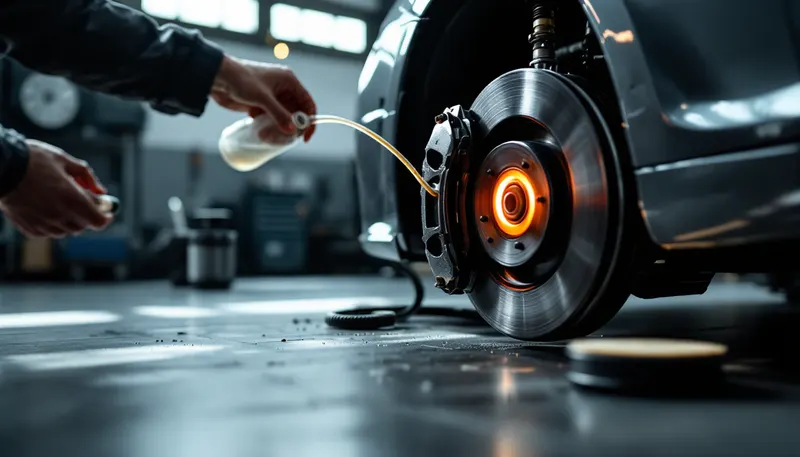
Book SBC Brake System Repair in Dallas
SBC hydraulic unit replacement with coding, pads and rotors with the system deactivated, and counter resets on W211, R230 and C219 cars showing the Service Brake Visit Workshop warning.