Diagnostics
Mercedes Check Engine Light Dallas: XENTRY vs Generic Scan
· 13 min read · Mercedes Benz Repair Dallas
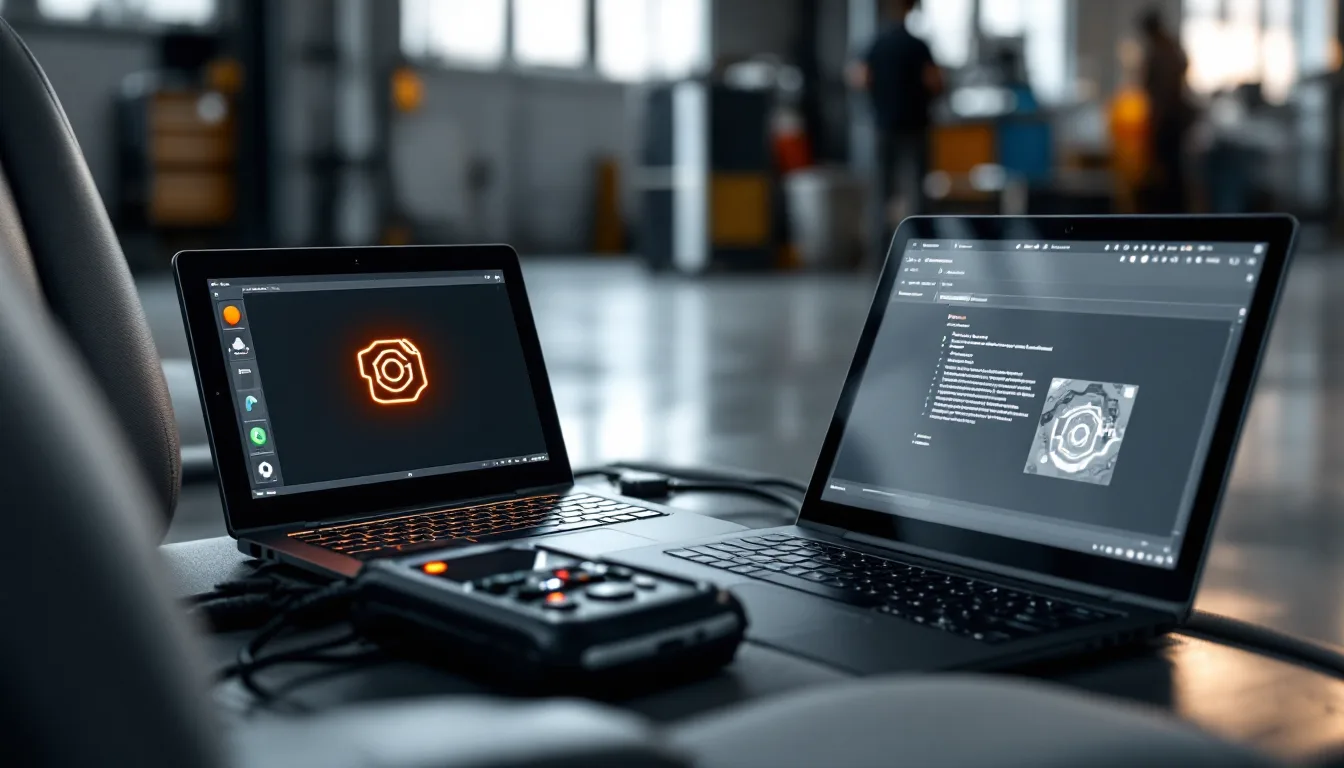
Why does a Mercedes check engine light need XENTRY instead of a generic code reader in Dallas?
A Mercedes-Benz check engine light is a message from the engine control unit, but the code a parts-store reader pulls from it is rarely the whole story on an M272, M274 or 722.9-equipped car. Generic OBD-II returns the powertrain P-code and a freeze frame. XENTRY, the factory diagnostic system, reads every control unit on the car, the manufacturer-specific codes behind the generic one, the live values the module used to set it, and runs the guided tests that separate a sensor from the fault it reports. In Dallas, an independent-shop XENTRY diagnosis is priced as a separate line at $149–$229 and takes about one to one and a half hours; the repair estimate follows from what it finds. Because Dallas, Collin, Denton and Tarrant counties still run the OBD emissions test, a lit light also has a registration consequence. If your light is on, email service@mercedesbenzrepair.net with the model and VIN.
What does a generic OBD-II code reader actually see?
Every gasoline car sold in the US since 1996 answers a standard set of requests on the diagnostic port, and a generic reader uses those requests and nothing else. It can retrieve stored and pending powertrain codes, the P0xxx series the standard defines, plus whichever P1xxx manufacturer codes its database happens to decode. It can show the freeze frame, a snapshot of engine speed, load, coolant temperature, fuel trims and vehicle speed captured when the code set. It can display a short list of live sensor values, report readiness monitor status, and clear the codes.
That is useful information and there is nothing wrong with starting there. What a generic reader cannot do on a Mercedes is talk to anything beyond the engine and transmission controllers on the emissions network. It has no access to the body, chassis, climate, SAM, EIS or suspension modules, and it does not understand the Mercedes-specific fault numbering, frequency counters and environmental data recorded alongside each fault. It reports that a condition exists; it does not say why.
The practical trap is that a P-code names a circuit or a measurement, not a part. P0300 says the engine misfired; it does not say whether a coil, an injector, a cam adjuster magnet or a vacuum leak caused it. Owners and some shops read the code description, replace the part named in it, and the light returns a week later. Mercedes engines in particular route several unrelated failures through the same handful of generic codes, which is where the examples below start.
What does XENTRY see that a generic reader cannot?
XENTRY, and the DAS system it replaced, is what Mercedes-Benz uses in its own workshops. Connected through the OEM pass-through interface with an online subscription, it begins with a quick test that polls every control unit on the car and lists each one with its fault count. On a W212 or W204 that can be thirty modules. The engine controller's fault memory shows the manufacturer-level code alongside the generic P-code, with a frequency counter, the mileage at first and last occurrence, and the operating conditions at each.
It then opens the actual values: camshaft position offsets in crank degrees, individual cylinder misfire counters, adaptation values per bank, cam adjuster solenoid duty cycle, transmission shift pressures and slip times, oil temperature at the moment of fault. From those the technician can see, for example, that bank 1 intake cam timing drifts several degrees late only at idle with hot oil, which is a very different finding from the bare P0016 the generic reader printed.
Guided tests are the third layer. XENTRY can command a cam adjuster solenoid, run a cylinder cut-out test, actuate the 722.9 shift solenoids, run the Airmatic compressor and watch the pressure sensor respond. Finally, XENTRY handles SCN coding: when a replacement control unit is installed, the software for that VIN is loaded online and the unit is coded to the car. A generic tool does none of this, which is why XENTRY diagnostics is its own service with its own range rather than a free add-on to a repair.
When does the generic read point you at the wrong part?
P0016 to P0019 cam correlation on the M272 and M273
The M272 V6, in production from 2004, and the M273 V8, from 2005, are documented on their M272 and M273 reference pages and powered the W204, W211, W212, W221 and W164 among others. On these engines P0016 and P0017 flag crank-to-cam correlation on bank 1 intake and exhaust, and P0018 and P0019 do the same on bank 2. A generic reader shows the code, and the first search result tells the owner to replace the cam sensor.
The cam sensor is seldom the cause. On the M272, the pattern commonly tied to a worn balance shaft sprocket is P0016 and P0017 together on one bank with cam timing that reads retarded in actual values. On the M273 the equivalent wear item is the idler gear. Both drive the timing chain, and both wear in a way that lets the chain, and therefore both camshafts on one bank, drift. XENTRY's cam offset values make the call without taking the engine apart: a sprocket problem moves both cams on the bank together, while a stuck adjuster or a failed solenoid moves one cam only. The repair paths differ by thousands of dollars, as the balance shaft and timing chain page explains, so this distinction is the single most valuable thing the diagnosis buys.
These engines were the subject of a class-action settlement, Seifi v. Mercedes-Benz USA, LLC, which provided an extended warranty for balance shaft and idle gear replacement up to the lesser of 10 years or 125,000 miles on MY2005–2007 engines within specific serial ranges, with a claim deadline of September 25, 2015, as recorded in the settlement document posted by NHTSA. That window has closed, so a Dallas owner today pays for the repair, which makes a correct diagnosis before the estimate even more important.
Misfire codes from a leaking cam adjuster magnet
The second M272/M273 trap starts with P0300 through P0306 or a single-cylinder misfire code. The cam adjuster magnets, the solenoids that control cam timing, sit at the front of each cylinder head with an electrical connector. Their seals harden and engine oil wicks past the connector pins into the wiring harness. From there it travels by capillary action along the loom toward the engine control unit connector and, on the way, into the ignition coil connectors.
A generic read shows misfires on cylinders whose coils and plugs are fine. Replace the coil named in the code and the misfire moves. XENTRY shows the misfire counters alongside cam adjuster plausibility faults, and a technician who knows the engine pulls the magnet connector and finds it wet. The fix is cam adjuster magnet seals, with the harness cleaned and the ECU connector inspected for oil; if oil has reached the control unit, that is a larger conversation. The M272/M273 oil leak page covers the oil cooler and valve cover leaks that often appear at the same mileage.
722.9 codes that look like an engine fault
The 7G-Tronic 722.9 was launched in 2003 as the first seven-speed automatic in a production car and had replaced the five-speed 722.6 across the range by 2008, according to the 7G-Tronic reference. Its control unit is integrated in the conductor plate between the valve body and the transmission housing, inside the fluid. When a speed sensor on that plate fails, the car drops into limp mode and the generic reader shows P0700, the generic request code, often with P0715, P0720 or a gear ratio code.
Owners read "transmission control system malfunction" and brace for a rebuild. XENTRY addresses the transmission controller directly and shows which of the internal speed sensors has lost signal and how often. The conductor plate is the repair in the common case, not the gearbox. The generic reader cannot tell you that because it never spoke to the transmission controller beyond the P0700 handoff. Details are on the 722.9 transmission page.
Airmatic, ABC and climate messages that are not engine codes at all
The cluster on a W164 or W221 can show "AIRMATIC visit workshop", and a W221 or C216 with Active Body Control can show "ABC visit workshop", with no check engine light at all. The owner plugs in a generic reader, sees no codes, and concludes the message is a glitch. It is not. Those warnings come from the suspension control units, which the generic protocol never queries. XENTRY reads the Airmatic module's fault memory, the pressure sensor, the level sensors and the compressor run time, which is how a leaking strut is separated from a tired compressor or a stuck valve block. Airmatic was introduced on the W220 S-Class in 1998, as the Airmatic history notes, and the cars we see in Dallas are old enough that these messages are routine; the Airmatic service page lists the ranges.
The same applies to climate control. An A/C that blows warm with no engine code is almost always a climate module or refrigerant issue, and a generic reader is silent about both. Refrigerant work is regulated: under Section 609 of the Clean Air Act, technicians servicing R-134a and R-1234yf systems must be certified by an EPA-approved program, and shops keep records of that certification on site, per the EPA MVAC page.
Does a lit check engine light fail the Texas emissions test in Dallas?
Texas eliminated the comprehensive vehicle safety inspection on January 1, 2025, but the emissions inspection continues in the designated emissions counties, which include Collin, Dallas, Denton, Ellis and Tarrant among 17 in total, according to the Texas Department of Public Safety. Gasoline vehicles 2 through 24 years old registered in those counties receive the OBDII test. Owners who heard that inspections ended are often surprised when registration renewal still asks for an emissions result.
The OBD test checks the MIL status and the readiness monitors. In plain terms, the inspection station connects to the same port your reader uses, asks whether the check engine light is commanded on, and asks whether the engine controller has completed its self-tests. A lit light is the practical problem. So are incomplete monitors, which is why clearing codes with a generic reader the night before does not help: clearing resets every monitor to not ready, and the car has to be driven through a specific mix of conditions before they complete again. The DPS criteria also note that, since February 1, 2025, a failure caused by an OBD communication error must be referred to DPS, so a car whose port does not talk properly is a separate headache.
The sensible order in Dallas is diagnosis first, repair second, readiness drive third, inspection last. XENTRY shows monitor status per system, so the shop can tell you whether the evaporative, catalyst and oxygen sensor monitors have completed before you drive to the station. The DPS page is the source for county lists and vehicle age brackets; check it rather than relying on secondhand summaries.
When should you stop driving with the light on?
A steady check engine light on a Mercedes is a request for a diagnosis within days, not a reason to pull over. A flashing check engine light is different. The engine controller flashes the light when it detects misfires severe enough to send unburned fuel into the catalytic converters, where it burns and can melt the substrate in minutes. Stop, switch off, and arrange transport. The misfire repair might be a $250–$450 cam magnet seal job; the converters it destroys are not.
Treat these the same way: a red coolant temperature warning, a red oil pressure warning, or a check engine light accompanied by a strong fuel smell or visible smoke. A yellow engine light with the car driving normally can wait for an appointment. A yellow light with limp mode, where the transmission holds second or third gear, is drivable at low speed to a shop but not on the highway. If in doubt, describe the symptom when you call and the shop will tell you whether to drive it in.
How does the shop run a check engine light diagnosis?
The process starts at the counter. The advisor records the symptom in your words, when it happens, whether the light is steady or flashing, and whether anything was replaced already. That last question matters because a car that has had three coils thrown at it has a different starting point from one nobody has touched.
The technician then connects XENTRY and runs the quick test across all control units. The engine controller's faults are read with their frequency and environmental data. Freeze frame and actual values are reviewed, and the technician decides which guided tests and physical checks apply: a smoke test for vacuum leaks, a scope on a cam sensor signal, a gauge on the fuel rail, a look at the cam magnet connectors on an M272. A test drive with XENTRY logging is common for intermittent faults.
The output is a written estimate with ranges for the repair the evidence supports, listed by line item, with what moves each figure. The diagnosis is priced separately at $149–$229 as a typical Dallas independent range, and the estimate follows it. Nothing is replaced on speculation, and if the finding is a maintenance item rather than a failure, the estimate says so. Owners of the GLC and other M274-powered cars should know that the four-cylinder has its own camshaft adjuster and timing behaviors that surface as P0016-type codes; the GLC model page covers what we look for on the X253.
What do the common follow-on repairs cost in Dallas?
The table lists typical independent-shop ranges in Dallas for the repairs most often written after a check engine light diagnosis on the engines discussed above. They are ranges, not quotes, and the right-hand column explains what pushes a job toward either end.
| Line item | Typical Dallas independent range | What moves the price |
|---|---|---|
| XENTRY diagnostics | $149–$229 | Intermittent faults that need a logged test drive |
| Cam adjuster (magnet) seals, M272/M273 | $250–$450 | Whether the harness needs cleaning or the ECU connector is wet |
| Oil cooler seals, M272/M273 | $650–$1,100 | Intake removal, condition of surrounding hoses |
| Valve cover gaskets (pair) | $550–$950 | Access on the chassis, spark plugs done at the same time |
| Oil filter housing gasket | $400–$700 | Engine variant and what is in the way |
| 722.9 fluid and filter service | $350–$550 | Pan and filter type, fluid specification |
| 722.9 conductor plate (TCU) with coding | $1,300–$2,200 | Whether the valve body is also worn |
| 722.9 valve body with conductor plate | $1,900–$3,200 | Mileage and fluid condition |
| 722.9 adaptation reset | $120–$180 | Usually bundled with the repair above |
Some perspective on the numbers. AAA's Your Driving Costs 2024 puts the average annual cost of owning and operating a new vehicle at $12,297, about $1,025 a month at 15,000 miles a year, up from $12,182 in 2023, per AAA. Keeping a ten-year-old E-Class on the road with an oil cooler seal job compares well with that figure. The people doing the work are in demand: the BLS reports 805,600 automotive service technician and mechanic jobs in 2024, median pay of $23.88 an hour, and about 33,600 added jobs from projected growth through 2034, per the BLS handbook. Technicians who hold a XENTRY subscription and know these engines are a smaller pool, which the diagnostic range reflects.
Every repair written from a diagnosis at the shop carries the 2-year/24,000-mile repair warranty, in full 2 years parts and 2 years labor, up to 24,000 miles, nationwide, and the invoice lists the XENTRY findings that justified it.
Will an independent diagnosis affect my Mercedes warranty?
Newer cars under the factory warranty or a service contract can still be diagnosed and repaired independently. The Federal Trade Commission's consumer guidance on auto warranties states that the Magnuson-Moss Warranty Act "makes it illegal for manufacturers or dealers to claim that your warranty is void" because someone other than the dealer did maintenance or repairs, and coverage can be denied only for a failure the improper work caused, per the FTC. If the XENTRY diagnosis finds a fault that is still covered, the shop will tell you, and you can take the finding to the dealer.
Before any repair, run the VIN through the NHTSA recall lookup, because a check engine light caused by a component under an open recall is repaired at no charge. The Dallas Mercedes repair hub lists the other systems the shop covers and how each is diagnosed.
Where do these figures come from?
- Texas Department of Public Safety, Emission Inspection Criteria: end of safety inspections, emissions counties, vehicle age brackets and the OBD communication-error rule.
- AAA, Your Driving Costs 2024: annual and monthly ownership cost figures.
- BLS Occupational Outlook Handbook, Automotive Service Technicians and Mechanics: employment, hourly pay and projected growth.
- FTC, Auto Warranties and Routine Maintenance: Magnuson-Moss guidance and the quoted statement.
- NHTSA recall lookup by VIN: open recall check before any repair.
- EPA, Section 609 MVAC: refrigerant technician certification.
- Seifi v. Mercedes-Benz USA settlement notice: M272/M273 balance shaft and idle gear extended warranty terms.
- 7G-Tronic, M272, M273 and Airmatic technical history.
- Repair ranges: typical independent-shop ranges in Dallas from the shop's service pages; the written estimate for a specific car follows the XENTRY diagnosis.