Maintenance
Mercedes Service A vs B: What Is Included and Dallas Cost
· 13 min read · Mercedes Benz Repair Dallas
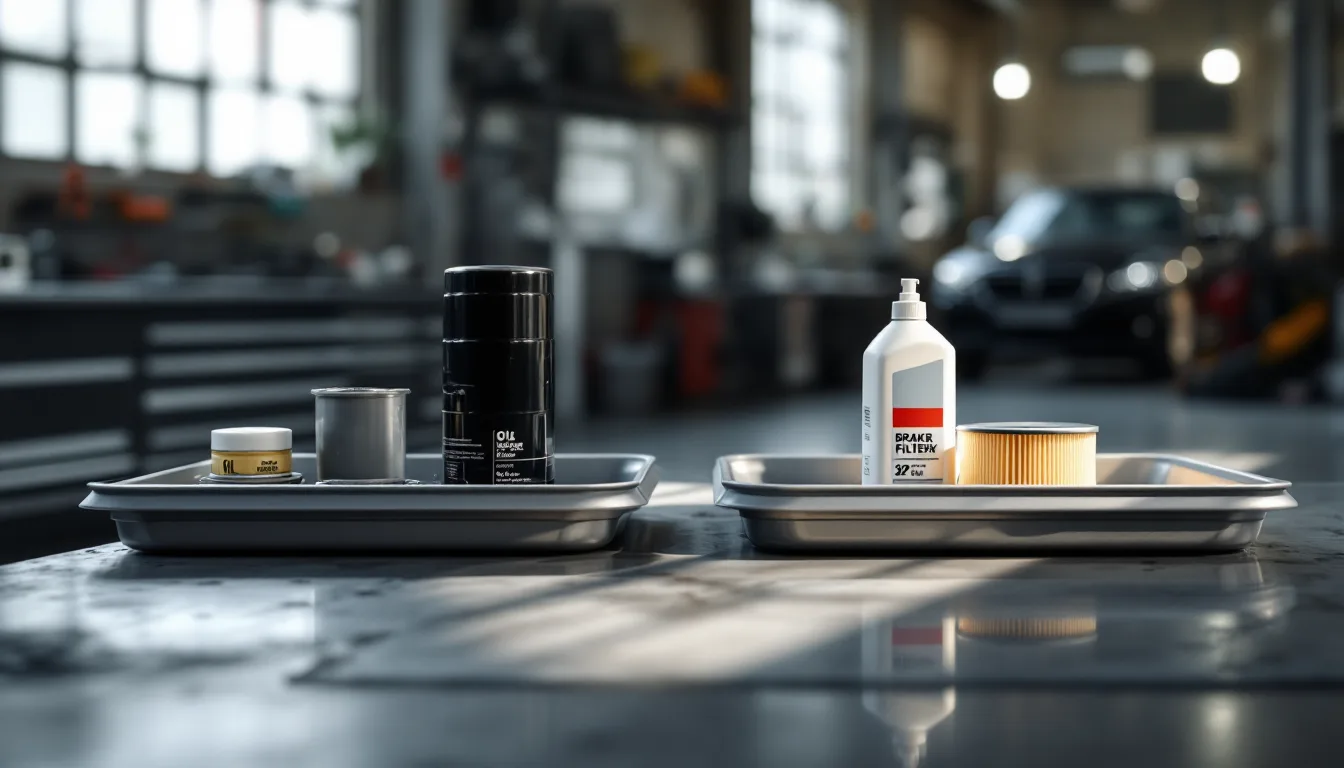
What do Mercedes Service A and Service B cost in Dallas?
Service A and Service B are the two alternating maintenance visits that Mercedes-Benz schedules for every car it sells in the United States, and they are the services most owners are quoted for at a dealer without a clear list of what is inside them. At an independent Mercedes specialist in Dallas, Service A typically runs $189–$329 and Service B $349–$649. What moves each figure is the engine's oil capacity, whether the car needs a combination cabin filter or a simple dust filter, and whether brake fluid has to be exchanged through an SBC system that requires XENTRY to put it into bleed mode. Both services use the approved oil specification the engine calls for and end with the service counter reset in the factory system. For a quote on your model and year, email service@mercedesbenzrepair.net with the VIN handy.
How does the Mercedes Flexible Service System work in the US?
Mercedes-Benz calls its maintenance program the Flexible Service System. The instrument cluster counts down the miles and days to the next visit and displays whether it will be an A or a B. Under the US maintenance schedule published by Mercedes-Benz USA, Service A falls due at 10,000 miles or one year, whichever comes first, and Service B at 20,000 miles or two years. The two alternate for the life of the car: A, then B, then A again.
In practice the counter on the dash is driven by time and distance rather than by an oil-quality sensor, so a car that does short trips in Dallas heat reaches the time limit well before the mileage. The display does not judge how hard the miles were. A car that spends its life idling on the Dallas North Tollway at rush hour wears its oil and brake fluid faster than one that commutes on open highway, and the schedule treats them the same. That is one reason the inspection portion of each service matters as much as the oil change.
The letters also run in sequence. If a Service B is skipped and the car simply receives another Service A, the brake fluid and the filters that were due slip a further two years. We see cars at 60,000 miles that have never had their brake fluid exchanged because each visit was booked as "an oil change."
What exactly is included in Service A?
Service A is the lighter of the two visits, but it is more than an oil change. On a Service A at our shop the work order lists:
- Engine oil drained and refilled with a Mercedes-approved synthetic meeting MB 229.5, 229.51 or 229.52 as the engine requires, confirmed against the car's data rather than a generic chart.
- A new oil filter element with its sealing rings, since the cartridge housings on most Mercedes engines use a paper element rather than a spin-on can.
- All fluid levels checked and corrected: coolant, brake fluid, washer fluid and, where the car has it, power steering.
- Tire pressure set and tread condition and wear pattern noted, including the spare if the car carries one.
- Brake inspection through the wheels: pad thickness, rotor condition, and the wear sensor leads.
- The maintenance counter reset in XENTRY so the cluster shows the correct countdown to the next service.
We also note anything we see on the lift that is not part of the service, such as a damp oil filter housing gasket or a weeping Airmatic strut, and report it on the invoice without doing the work unless you ask. Allow about an hour to an hour and a half.
Why does the oil approval matter more than the brand?
Mercedes does not specify oil by brand or by viscosity alone. It publishes approval sheets, the MB operating fluid approvals known as BeVo, that list every product tested and released for a given specification. MB 229.5 covers most gasoline engines of the last two decades, 229.51 is the low-ash formulation required for diesels with particulate filters and for a number of gasoline engines, and 229.52 is a later low-ash grade with extended drain capability. The sheet for your engine names the specification; the shop's job is to pour a product on that approval list and write the sheet number on the invoice.
An oil that says "suitable for Mercedes" on the jug is not the same as an approved oil. The difference matters most on engines with sensitive components: the M272 and M273 with their timing chain and balance shaft history, the M274 and M276 with camshaft adjusters that depend on clean oil at the correct viscosity, and the M139 and M177 AMG engines that run at high specific output.
What does Service B add on top of Service A?
Service B includes everything in Service A and then goes deeper. The items that make it a two-to-three-hour visit on a Service B appointment are:
- Cabin dust or combination filter. The combination filter adds an activated charcoal layer and costs more than the plain dust element; the correct type depends on the car's climate control specification.
- Brake fluid exchange. Fresh fluid of the correct DOT grade is pushed through all four calipers until the old fluid is out. On cars with SBC the system must be put into bleed mode with XENTRY first, which changes both the time and the risk if it is skipped.
- Engine air filter check. The element is inspected and replaced if it is contaminated; Dallas construction dust and cottonwood season tend to shorten filter life.
- Deeper inspection. Suspension joints and bushings, driveshaft boots, exhaust hangers, the underbody for fluid trails, the battery and charging system, and the lighting are checked and documented.
The result is a service that touches the systems most likely to cause trouble between visits, rather than only the ones that keep the engine lubricated.
Why is brake fluid part of the schedule?
Brake fluid absorbs moisture from the air through the hoses and reservoir cap, and the moisture lowers its boiling point and corrodes the inside of calipers and ABS or SBC hydraulic units. On a conventional system the exchange is straightforward. On the SBC-equipped W211 E-Class, R230 SL and 2006 CLS, the electro-hydraulic unit holds the system at very high pressure and will cycle the pump during a conventional bleed, which is why the factory procedure requires XENTRY to deactivate it first. Mercedes-Benz USA extended SBC hydraulic unit coverage to 25 years from the original warranty start with no mileage limit, according to the coverage addendum posted by NHTSA, but that extension does not cover neglected brake fluid, and a corroded caliper is still the owner's problem.
What do dealers commonly add to a Service A or B?
The factory list for each service is short and specific. A dealer service drive often presents a longer menu, and it helps to know which items are maintenance and which are discretionary. Items that commonly appear on top of a Service A or B quote include fuel system or induction cleaning, throttle body cleaning, a coolant exchange ahead of its schedule, nitrogen tire fill, wiper blades, a battery replacement based on a tester printout, and a four-wheel alignment without a tire wear complaint. None of those are part of Service A or Service B as Mercedes defines them.
Some of those extras are reasonable on a given car; a battery that tests weak before a Dallas summer is worth replacing. The point is that they should be quoted as separate lines with a reason attached, not folded into the service price so that the total appears to be "what Service B costs." When we recommend something beyond the service, the invoice shows it separately with the finding that prompted it.
What do Service A and Service B cost at an independent shop in Dallas?
The table shows typical independent-shop ranges in Dallas. Every price is a written range before the car goes on the lift, and the final figure lands inside it unless the inspection finds something you approve separately.
| Service | Typical Dallas independent range | Time on the lift | What moves the price |
|---|---|---|---|
| Service A | $189–$329 | 1–1.5 hours | Oil capacity by engine, approval grade, filter type |
| Service B | $349–$649 | 2–3 hours | Everything above plus cabin filter type and brake fluid method |
| SBC counter reset only | $120–$180 | Under an hour | Standalone reset on SBC cars |
| SBC pads and rotors, per axle | $450–$900 | 2–5 hours | Rotor type, wear sensors, SBC deactivation |
| XENTRY diagnostic session | $149–$229 | 1–1.5 hours | Added when a warning or fault needs investigation during the service |
What moves a Service A or B from the bottom of the range to the top?
Oil capacity and grade by engine
The single largest variable is how much approved oil the engine holds. A four-cylinder M271 or M274 in a C-Class sits at the low end. A V6 M272 or M276 needs more, a V8 M273 or M278 more again, and an AMG M156, M157 or M177 the most, with a larger filter to match. The approval grade also matters: a 229.52 or 229.71 low-viscosity product costs more per quart than a 229.5, and the engine, not the shop, decides which one is required.
Filter type
Cabin filters range from a simple dust element to a combination charcoal filter, and some models use two. Oil filter elements vary in price by engine family. Engine air filters on V8 and AMG engines come in pairs. None of these are large individually, but together they move a Service B by a meaningful margin between a four-cylinder sedan and a twin-turbo V8 SUV.
Brake fluid on SBC cars
A brake fluid exchange on a conventional system is routine labor. On an SBC car the technician connects XENTRY, puts the system into its bleed mode, performs the exchange, and returns the unit to normal operation. That additional step is why a Service B on a 2003–2006 E-Class or an R230 SL falls toward the upper half of the range even though the oil capacity is modest.
Access and condition
A skid plate with a dozen fasteners, a sealed underbody panel on a newer car, or a filter housing hidden beneath an intake manifold adds time. So does a car arriving with a drain plug that was overtightened at its last service, or a filter housing cap that someone cracked. These are noted and discussed, not silently billed.
Why is the dealer often more expensive for the same service?
We do not publish dealer figures because they vary by store and by month. The reasons a dealer invoice for Service B commonly lands higher than an independent quote are structural rather than secret. A franchised dealership carries a larger facility, a sales floor, a loaner fleet and a service-drive staff that an independent shop does not. Its labor rate reflects that overhead. The parts are also commonly billed at list, while an independent shop can supply the same approved oil and the same filter element from the same suppliers at its own margin.
The dealer is not without advantages. Warranty and recall work must be done there, and for a car under its original new-vehicle coverage, a dealer visit may bundle a software campaign with the service. For a car outside the new-car warranty, or an owner who wants the service list followed without additions, the independent route offers the same approved fluids, the same factory reset and a line-item invoice.
Does an independent Service A keep my warranty intact?
Yes, provided the work is done to the factory specification and documented. The Federal Trade Commission's guidance on auto warranties and routine maintenance states that an independent mechanic, a retail chain shop or the owner can do routine maintenance, and that the Magnuson-Moss Warranty Act "makes it illegal for manufacturers or dealers to claim that your warranty is void" simply because someone other than the dealer did the work. A manufacturer or dealer may deny a specific claim only when the improper work caused the failure.
That last sentence is why documentation matters more than where the service is done. Our Service A and B invoices list the oil approval sheet number, the quantity, the filter part numbers, the brake fluid grade, the mileage and the date, and we keep the record so that it can be produced if a warranty question arises later. It is also worth running the VIN through the NHTSA recall lookup once a year, because an open campaign is dealer work at no cost to you and we will point it out rather than duplicate it.
How is the service record kept on a modern Mercedes?
Most newer Mercedes no longer come with a paper service book. The maintenance history lives in a digital service record tied to the VIN, which a dealer or a connected independent shop with the factory system can read and write. When your car supports it, we record each Service A and Service B in that factory system through our XENTRY online connection, so the entry appears alongside any dealer visits when the car is sold or inspected. Where the car predates the digital record, or where the entry cannot be written for a given model, the invoice and the reset counter in the cluster are the record, and we provide a printed copy with each service.
For an owner, the practical step is simple: ask any shop whether the service will be entered in the factory record, and keep the invoice either way.
What happens if the schedule is stretched?
Stretching a Service A from 10,000 miles to 15,000 on a modern long-drain oil is unlikely to cause immediate harm on a highway car, but the tradeoff falls on the components that depend on clean oil at the right viscosity. Camshaft adjusters on the M274 and M276, the timing chain tensioner on the M271, and the turbocharger bearings on the current four-cylinders are the parts that show the effect first. Stretching a Service B is more consequential because the brake fluid and the filters that were due in that visit do not carry over to the next A. We explain where the car is in the cycle so that an owner can decide with the full list in front of them rather than the letter on the dash alone.
Is Service B worth it on a car that is ten years old?
Routine maintenance is a small part of the real cost of running a car. AAA's 2024 Your Driving Costs analysis puts the average annual cost to own and operate a new vehicle at $12,297, with insurance at about $1,715 and finance charges at about $1,332 of that total. A Service B at $349–$649 on a car that is paid off is a fraction of what a replacement car costs each year before it has moved, and it is the service that catches the brake and suspension items that turn into large repairs if ignored.
Labor is also a smaller share of the invoice than many owners assume. The Bureau of Labor Statistics outlook for automotive service technicians gives a 2024 median wage of $23.88 an hour for the trade as a whole, with about 33,600 new positions expected over the decade to 2034. The approved oil, the filters and the factory system access make up the rest of what a Mercedes service costs, which is why the same shop will quote very different figures for a C300 and an E63.
How is the service work covered?
Service A and Service B parts and labor at our shop are covered for 2 years parts and 2 years labor, up to 24,000 miles, nationwide. If a filter housing seal weeps or a drain plug seal fails within the coverage period, the correction is on us, and because the coverage is nationwide the 2-year/24,000-mile terms hold even if the problem surfaces while you are traveling. For an overview of everything we do on these cars, start from the Mercedes repair hub, and to book a Service A or B, email service@mercedesbenzrepair.net and tell us the model year and current mileage.
Where do these figures come from?
- Mercedes-Benz USA, service and maintenance schedule (Service A and Service B intervals)
- Mercedes-Benz BeVo operating fluid approvals (MB 229.5, 229.51, 229.52, 229.71)
- FTC consumer guidance on routine maintenance and warranty rights
- AAA, Your Driving Costs 2024 study
- Bureau of Labor Statistics, Occupational Outlook Handbook, automotive service technicians
- Mercedes-Benz USA SBC extended coverage addendum, posted by NHTSA
- NHTSA recall lookup by VIN