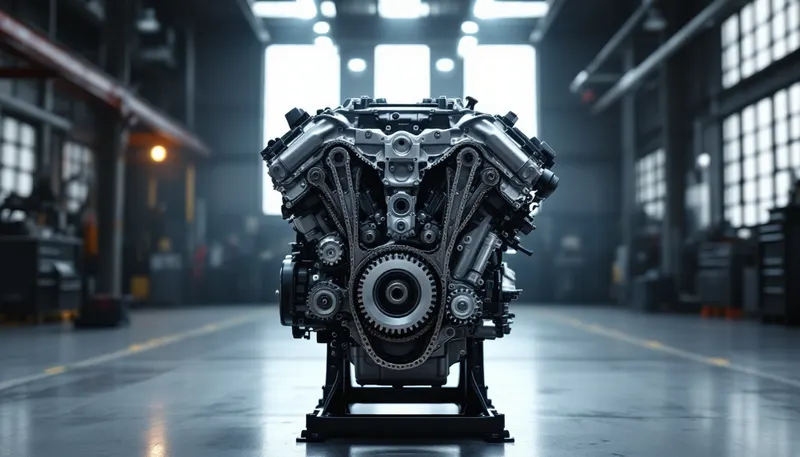
M272/M273 Balance Shaft and Timing Chain Repair
M272 balance shaft, M273 idler gear, chains and guides
- Price range
- $2,800–$6,500
- Typical time
- 2–4 days
$400–$2,300 · 2–8 hours
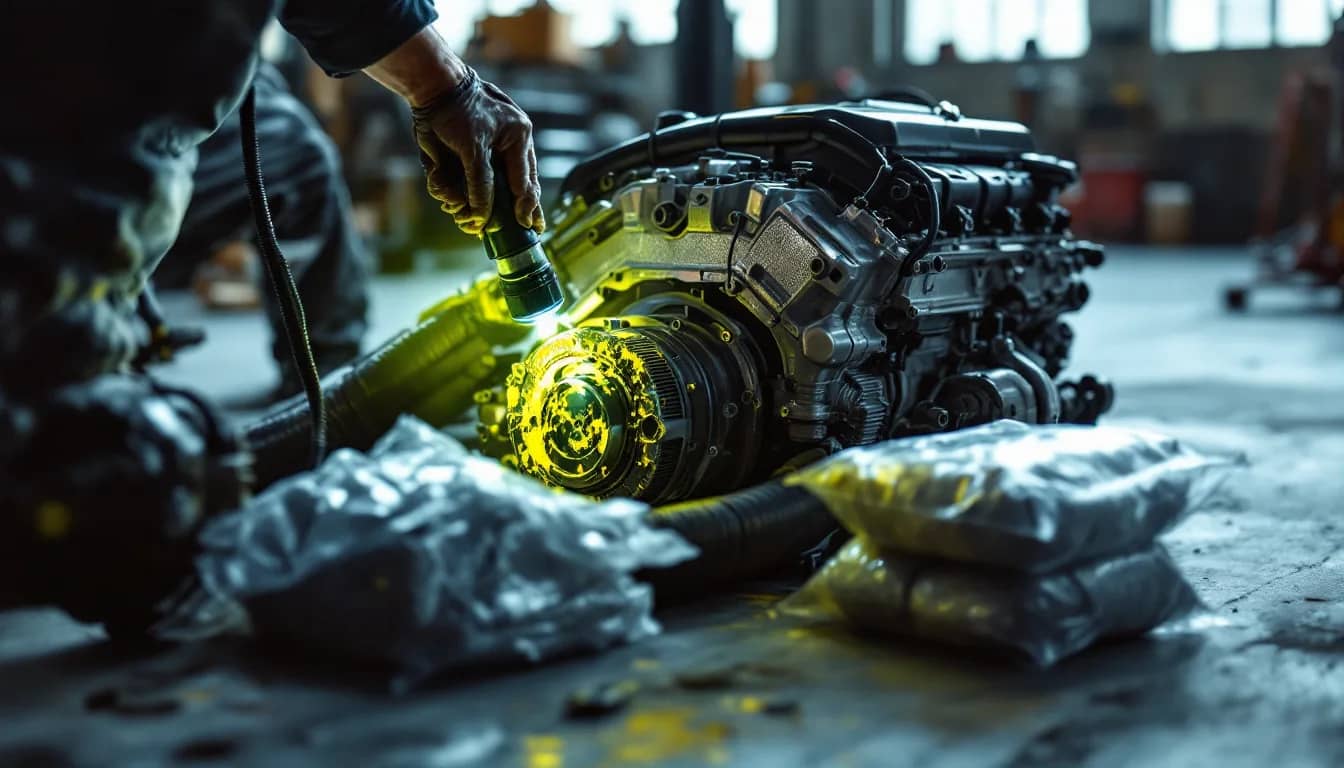
The M272 V6 and M273 V8 leak from a short list of places: the oil cooler seals in the valley, the valve covers, the filter housing and the cam magnets. We find the source with dye before anything is removed.
Repairs covered by a 2-year/24,000-mile warranty, independent shop
Symptoms
Problem
Oil smell at stoplights, dry driveway
Likely cause
Oil cooler seals leaking into the valley
The fix
Intake off, cooler seals, valley clean-out
Problem
Oil in the cam sensor connector
Likely cause
Cam magnet seal failed, oil wicking along the wires
The fix
Magnet seals, connector clean, harness check
Problem
Wet valve cover edge, oil on the manifold
Likely cause
Hardened cover gasket and tube seals
The fix
Gaskets, tube seals and new bolts
Problem
Drip at the bottom of the bellhousing
Likely cause
Rear main seal, or valley oil running back
The fix
Dye trace first; rear main only when confirmed
Both engines share a layout that puts the oil cooler in the valley between the cylinder banks, under the intake manifold. The cooler sits on the block with a pair of seals, and when those harden, oil collects in the valley and either burns off on the hot block or runs down the back of the engine and drips from the bellhousing. From underneath it looks like a rear main seal.
The valve cover gaskets harden in the same way and let oil onto the exhaust manifolds, which is the source of the burning smell at traffic lights. The oil filter housing gasket and the oil cooler line O-rings leak at the front, and the camshaft adjuster magnets, which are small solenoids on the front of each head, leak oil through their own seal into the electrical connector.
Rear main seals do fail, but far less often than the valley seals that mimic them. That distinction is worth several hundred dollars on the estimate, which is why we trace first.
The seals are rubber rings compressed between the cooler and the block, in the hottest part of the engine, cycled from cold to full temperature thousands of times. They lose elasticity and begin to seep, typically well past 60,000 miles but earlier on cars that have run hot or seen extended oil intervals. Oil below the MB 229.5 specification accelerates the hardening, and so does the heat soak after a long summer highway run.
Oil sitting in the valley is more than a smell. It soaks the knock sensors and their connectors, degrades the intake manifold seals and the vacuum lines routed through the valley, and on the M272 coats the intake runner flap linkage. On a leak that has been ignored for a long time we often find a knock sensor fault alongside, which is a cheap part but a large labor overlap.
There is also a fire risk when the oil reaches the exhaust side of the heads; it is small, but it is why we treat a heavy valley leak as a repair to schedule rather than defer.
Each camshaft adjuster magnet has a seal between its body and the electrical pins. When the seal fails, engine oil under pressure is pushed into the connector. From there capillary action carries it along the strands inside the insulation of the harness, and it can travel all the way to the engine control unit connector.
A magnet seal is a quick repair at $250–$450. Oil that has reached the control unit means cleaning the connector and, in the worst cases, replacing harness sections or the ECU. We check every magnet connector on any M272 or M273 that comes in for another job because catching it early is the difference between the two outcomes.
The symptom owners notice first is usually a camshaft position fault or rough running, not a visible leak, because the oil stays inside the connector. Pulling the connector and finding the pins wet is a thirty-second check we do on every visit.
Oil travels. A valley leak ends up at the bellhousing, a valve cover leak ends up on the oil pan, and a filter housing leak sprays across the front of the block and down. Replacing the part nearest the drip is how an owner pays for a rear main seal and still has a leak.
We degrease the engine, add UV dye to the oil, and drive the car for a day or send you off with it for a few hundred miles. Under the UV lamp the dye shows the origin, not the destination. A borescope through the intake gap confirms whether the valley is wet without pulling the manifold. The estimate then names each confirmed source separately so you can stage the work if you want.
Dye also catches the second leak. It is common for a valley leak and a valve cover leak to coexist on a 100,000-mile engine, and fixing only the larger one leaves a smell that makes the first repair look like it failed. Naming both up front avoids that conversation.
The intake manifold comes off, which on the M272 means disconnecting the tumble flap actuator and on the M273 the throttle body and associated plumbing. The oil cooler is unbolted from the block, the valley is cleaned of accumulated oil and sludge, and new seals are fitted with the cooler torqued in sequence. Knock sensors are checked and their connectors cleaned.
With the manifold off, the intake manifold gaskets and the valley vacuum lines are replaced as a matter of course; they are inexpensive and the labor is already spent. If a cam magnet connector is oily, that is done at the same time. The job is four to six hours and the range is $650–$1,100.
On the M272 with a sticking intake runner flap, the manifold itself may need attention, and we will say so when it is off rather than reassemble a known problem. The flap linkage is plastic and brittle by this age.
A slow valve cover seep that leaves a faint smell and no drip can be scheduled with your next Service A or B. A cam magnet connector with oil in it should be done promptly to protect the harness. A valley leak heavy enough to drip at the bellhousing should be repaired before the knock sensors and intake seals are compromised, and a leak that drops the oil level a quart between services is already affecting lubrication margins.
Age matters more than mileage for the cam magnets. We see dry connectors on high-mileage cars and wet ones on garage-kept examples, so the check is worth doing on every 2005–2012 M272 or M273 regardless of how the car has been used.
If you are not sure which category yours falls into, the dye trace is the cheapest answer and it carries straight into the repair if you proceed.
Cam magnet seals run $250–$450, the oil filter housing gasket $400–$700, valve cover gaskets as a pair $550–$950, oil cooler seals $650–$1,100 and a confirmed rear main seal $1,400–$2,300 because the transmission must come out. A rear main seal job includes a look at the pilot bearing and transmission mounts, which are exposed with the transmission out. Combining the valley and valve covers in one visit shares the degrease, dye and reassembly time, which the estimate reflects.
What moves the number is access, which varies between a W204 and an ML, how much cleaning the valley needs, and whether knock sensors or intake flaps are found damaged when the manifold is off. Every oil leak repair is covered for 2 years parts and 2 years labor, up to 24,000 miles, nationwide. For a dye trace appointment, email service@mercedesbenzrepair.net.
Seals and gaskets are genuine Mercedes-Benz or from the suppliers who produce them for the factory, because the compound and geometry of the oil cooler seals matter at valley temperatures. We do not substitute gasket maker for a formed seal; valve cover bolts are renewed because the originals stretch.
Cam magnets are replaced as units when the seal has failed, since the updated magnets carry a revised seal. Oil is a Mercedes-approved synthetic to MB 229.5 and the filter is OE. Staged repairs are itemized.


Pricing
| Service | Price range | Typical time |
|---|---|---|
| Oil cooler seals (valley) with intake gaskets | $650–$1,100 | 4–6 hours |
| Valve cover gaskets, pair, with tube seals and bolts | $550–$950 | 2–3 hours |
| Oil filter housing gasket and cooler line seals | $400–$700 | 2–3 hours |
| Cam adjuster magnet seals and connector clean | $250–$450 | 1–2 hours |
| Rear main seal (confirmed by dye) | $1,400–$2,300 | 6–8 hours |
Ranges are per leak source; combining sources in one visit lowers the total. A dye trace precedes any repair over $400.
The offer
Risk reversal
Covered for 2 years parts and 2 years labor, up to 24,000 miles, nationwide
No deposit, no card online: you approve the written range before any part is ordered
Published range
$400–$2,300
2–8 hours
Models
Questions
You usually cannot tell from underneath, because valley oil runs down the back of the block and drips off the bellhousing exactly where a rear main seal would. A dye trace and a borescope look into the valley settle it in a day, and the valley is the source far more often.
No. The cooler sits in the valley under the manifold with the seals between cooler and block, so the manifold comes off, which is most of the labor. The upside is that intake gaskets, valley vacuum lines and knock sensor connectors get attention at no extra access cost.
Because it travels. Oil forced through a failed cam magnet seal wicks along the copper strands inside the harness toward the engine control unit. A magnet seal is a small repair; a contaminated ECU connector or harness is not. We check the connectors on every M272 and M273 we see.
Not on these engines. Additives swell rubber briefly, but the cooler seals are compressed rings at high temperature and the cover gaskets are formed profiles; neither recovers once hardened. Additives also alter the oil, which matters with hydraulic cam adjusters and a chain tensioner that rely on it.
Cam magnet seals or a filter housing gasket are one to three hours, valve covers a half day. Oil cooler seals are four to six hours and usually a drop-off; a rear main seal is a full day because the transmission comes out. A dye trace adds a short first visit.
A valley or valve cover job does not open the timing cover, so the shaft is not visible. What we can do on any 2005–2008 engine is read the cam correlation data in XENTRY and check the filter for metal, which shows whether the sprocket problem is present without extra teardown.
Related
M272 balance shaft, M273 idler gear, chains and guides

Approved oil, filter, inspection and XENTRY reset
Factory XENTRY scan, guided tests, SCN coding
Book M272/M273 Oil Leak Repair in Dallas
Source-first oil leak repair on Mercedes M272 V6 and M273 V8 engines: oil cooler seals, valve cover gaskets, filter housing, cam magnet seals and rear main seals, with a UV dye trace before parts are ordered.