Suspension
Mercedes ABC Leaks: The Real Cost of Waiting in Dallas
· 14 min read · Mercedes Benz Repair Dallas
What does Mercedes ABC suspension repair cost in Dallas?
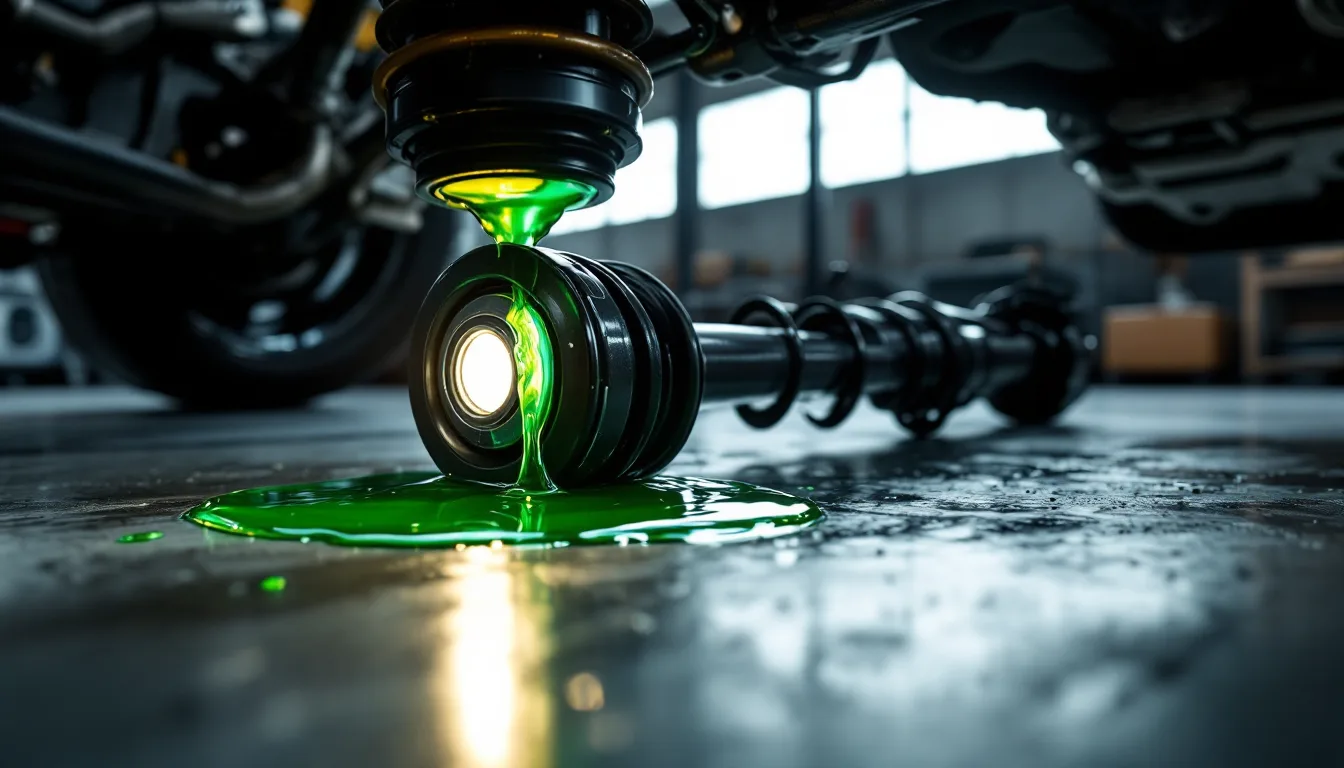
Active Body Control repair on a Mercedes-Benz at an independent Dallas shop typically runs $350–$2,900 per repair. A fluid and filter flush sits at the low end, a tandem pump or a single hydraulic strut at the high end, and valve blocks and pulsation dampers in between. ABC is the hydraulic suspension on the CL, the S-Class and the SL, and it punishes neglect: a weep at a strut seal that costs a few hundred dollars to catch early becomes a pump, a strut and a contaminated system if the car is driven on it for a year. This article covers how ABC works, where it leaks, what the white and red warnings mean, what each repair costs, and how to read a seller's claim that the light is only a sensor. If your ABC message is on, email service@mercedesbenzrepair.net for a written estimate with a range before any parts are ordered.
What is Active Body Control and how does it work?
ABC is a hydraulic active suspension. Instead of air springs, each corner has a conventional coil spring sitting on a hydraulic strut whose length the system changes in real time to counter body roll, pitch and dive. Mercedes put the first production version on the C215 CL-Class in 1999, according to the Active Body Control history on Wikipedia, with a second generation arriving on the C216 CL in 2006.
The tandem pump is driven by the engine's serpentine belt and shares a housing with the power steering pump. It generates very high pressure in the ABC circuit, far above anything a power steering system sees. Two valve blocks, one per axle, carry the solenoid valves that meter fluid into and out of each strut. The struts themselves are a hydraulic cylinder under a coil spring; the piston seal and the rod seal are the parts that fail. Accumulators, which are nitrogen-charged spheres, store pressure and smooth demand, and pulsation dampers on the pump outlet absorb the pressure ripple the pump creates. The fluid is a specific Mercedes-approved hydraulic oil with its own filter in the reservoir. Body acceleration sensors and level sensors feed a control module that moves fluid many times a second.
How is ABC different from Airmatic?
Owners mix them up because the warnings look similar and the cars overlap. Airmatic is pneumatic: an electric compressor, air struts and a valve block, with the car's height set by air pressure. ABC is hydraulic: a belt-driven pump, oil-filled struts and valve blocks, with the car's attitude corrected actively by moving fluid under pressure. On the W220 S-Class Airmatic was standard and ABC was optional, per the same Wikipedia ABC entry, and the two were never fitted to the same car.
The practical differences matter for repair. Airmatic leaks air, which is free and harmless; ABC leaks oil, which is expensive, a fire concern near a hot exhaust and corrosive to the bushings and paint it runs over. Airmatic failures announce themselves with a sagging corner; ABC failures often start as a wet strut nobody looks at. And Airmatic parts are cheaper across the board, which is why an ABC car needs a more disciplined owner. Our Airmatic air suspension page covers that system separately.
Which Mercedes models have ABC?
ABC was standard or optional on these chassis:
- C215 CL-Class (1999–2006) and C216 CL-Class (2007–2014): fitted to every CL coupe.
- W220 S-Class (1999–2006) and W221 S-Class (2007–2013): generally standard on the V12 and AMG sedans, optional on others, with Airmatic the default elsewhere in the range.
- R230 SL (2003–2012): fitted to the SL500, SL550, SL600 and the SL55 AMG and SL65 AMG.
- R231 SL (2013–2020): fitted to the later SL as well, including the SL63 AMG.
If you are not sure which system your car has, the quickest check is under the hood: an ABC car has a hydraulic reservoir with a dipstick near the pump, and an Airmatic car has no such reservoir. XENTRY settles it in seconds.
What do the white and red "ABC Visit Workshop" messages mean?
The cluster shows two levels. The white message means the control module has logged a fault but the system is still working: usually low fluid, a pressure that took too long to build at startup, a level sensor out of range or a single valve fault. The car still levels and the ride is normal or nearly so. This is the stage at which to bring it in.
The red message, often with "Car too low" or "Stop", means the module has lost control of ride height or pressure. The car may sag at a corner or drop entirely, the ride becomes harsh because the struts are riding on their internal stops, and steering feel changes because the tandem pump also drives the steering. Driving on a red ABC warning risks the pump running dry and the struts bottoming. Stop and have it towed.
A third pattern is the message that appears at cold start and clears after a minute. That is a pump taking too long to reach pressure, usually from a worn pump, a tired pulsation damper or a filter clogged with the debris of a worn pump. It is the warning owners ignore longest and it is the one that precedes the expensive bill.
Where does ABC leak?
Everything in ABC runs at high pressure, so every seal is a candidate. These are the leak points in the order we find them on Dallas cars.
Strut seals
The rod seal at the top of each strut weeps first. You see it as a damp ring on the strut body, then a wet spring seat, then drips on the inner shoulder of the tire and a spot on the garage floor. Front struts fail more often than rears because they carry the engine and do more of the roll control. A weeping strut loses a little fluid every mile, and the reservoir drops until the white message appears.
Tandem pump
The pump leaks at its shaft seal, where it throws fluid onto the belt, and at the junction between the steering and ABC sections. A pump that is losing pressure internally rather than externally shows up as a slow rise at startup rather than a puddle. Pump failure is the most expensive consequence of running low on fluid, because the pump is lubricated by the fluid it pumps.
Hoses and lines
The high-pressure hoses from the pump to the front valve block and the rear lines that run the length of the car age and seep at their crimps. On the R230 the rear lines pass near the exhaust and the hose jackets harden. Lines are cheaper than struts to replace, but the symptoms look the same from the driver's seat.
Valve blocks
The valve blocks leak at the solenoid O-rings and at the accumulator fittings. A valve block that leaks internally lets a corner bleed down overnight without any external drip, and that is the case that fools a flashlight inspection.
Why does a small leak become a pump and a strut?
The chain is mechanical, not a sales pitch. A weeping strut seal lowers the reservoir level. The pump pulls air when the level is low enough, and air in a high-pressure hydraulic pump cavitates, which pits the pump's internal surfaces and generates metal particles. Those particles load the filter until it clogs, and then they bypass it and circulate. They score the valve block spools and the strut piston seals, so a system that had one leaking strut now has a worn pump, a filter full of metal, a valve block that sticks and a second strut starting to weep.
That is why the price difference between catching a leak early and catching it late is a multiple, not a percentage. A strut replaced when the seal first weeps is one strut and a fluid service. The same strut ignored for a year is a strut, a pump, a flush and often a valve block. The cost table below shows the arithmetic.
How often should ABC fluid and the filter be changed?
The fluid does the work in this system, and it degrades. Heat breaks it down, the pump sheds fine particles into it even when healthy, and moisture enters through the reservoir vent. Dark, opaque fluid in the reservoir, or fluid that smells burnt, means the system has been running on contaminated oil for some time. Mercedes did not publish an aggressive change interval for ABC in the US schedule, and that is why so many high-mileage cars have never had it done.
Our practice is a fluid and filter flush with the correct Mercedes-approved hydraulic oil at $350–$550 whenever the fluid is discolored, at every strut or pump replacement, and as a preventive service on a car that has gone several years without one. A flush is not a fix for a leak, but it is the single cheapest thing that extends the life of a pump and a valve block, and what comes out of the system tells us a great deal about its condition.
What does ABC repair cost in Dallas?
These are typical independent-shop ranges in Dallas for the ABC suspension repairs we perform. What moves the price inside each range: front versus rear strut, whether the strut is an AMG unit, whether the pump is a new or remanufactured assembly, and how much contaminated fluid has to be purged from the rest of the system.
| ABC repair | Dallas independent range (typical) | Price drivers |
|---|---|---|
| ABC strut, each | $1,400–$2,800 | Front and AMG struts at the top; bleed and calibration included |
| Tandem pump | $1,500–$2,800 | New versus remanufactured, plus belt and fluid |
| Valve block (front or rear) | $900–$1,900 | The front block is the more expensive one |
| Pulsation damper or accumulators | $400–$900 | Often done as a set |
| Fluid and filter flush | $350–$550 | Performed with every other ABC repair |
| ABC repair visit | $350–$2,900 per repair | Diagnosis, one failed component, calibration |
What does an early catch look like?
A front strut found weeping at an oil change: one strut at $1,400–$2,800 plus a flush at $350–$550. The pump and the valve blocks are unaffected, and the second front strut is inspected and left alone if it is dry.
What does a late catch look like?
The same strut after a year of topping off the reservoir: the strut, a tandem pump at $1,500–$2,800, the flush, and a valve block at $900–$1,900 if the spools are scored. On an older W220 or C215 the total can approach what the car is worth, which is how good ABC cars end up in salvage auctions.
What does "the ABC light is just a sensor" really mean?
Nearly every used ABC car for sale comes with this sentence. Here is what it usually means.
The ABC module logs faults from pressure sensors and level sensors, and a sensor can fail. But a sensor fault is rarely the whole story; a pressure sensor that reads low because the pressure is low is doing its job. In our experience, "just a sensor" most often turns out to be one of the following: a pump that is slow to build pressure at cold start, a reservoir that has been topped off repeatedly, a strut that has been wiped clean before the showing, or a valve block with a corner that bleeds down overnight. Less often it is a level sensor linkage that was knocked loose or a corroded connector at a valve block, and those are inexpensive. The way to tell is not to take the seller's word for it; it is to let the car sit overnight, measure the corners, look under it with a light, and read the module.
How do we diagnose ABC before repairing or buying it?
Our ABC diagnosis follows a fixed sequence. First, a cold start with the hood open: we time the rise to normal height and listen to the pump. Second, XENTRY diagnostics on the ABC module: stored faults, live pressures, live strut positions and the rodeo test, which cycles each corner through its range and exposes a strut or valve that cannot follow. Third, the reservoir: level, color, smell and the state of the filter. Fourth, a lift inspection of every strut, line, the pump and both valve blocks. Fifth, an overnight sit test when the history suggests a corner bleeds down.
That takes $149–$229 of diagnostic time and gives us the full condition of the system rather than the one part that set the light. The written estimate shows what failed, what it damaged and what can wait. On a pre-purchase inspection the same sequence produces a negotiation list rather than an estimate, and it has talked more than one buyer out of a car that looked perfect on the lot.
Should you buy a used ABC Mercedes in Dallas?
The honest answer is yes, if you buy it the right way and budget for the system. A CL or SL with a healthy ABC system rides and corners in a way few cars match, and the prices on older examples are low precisely because buyers fear the suspension. The strategy is to pay for a pre-purchase inspection that includes the ABC sequence above, to walk away from any car with a red message history, dark fluid or more than one weeping strut, and to assume that a car past fifteen years old will need at least one strut and a pump while you own it.
The Dallas climate matters here as well. Hydraulic seals harden in heat, and a car that spent its life on a Texas driveway has seen more summers above 100 F than a Northern car. The upside is that Dallas cars have not seen road salt, so the lines, fittings and valve block bodies are usually sound. Look for a car that was garaged and that has a record of a fluid service.
The ownership math favors a well-bought ABC car. AAA's 2024 "Your Driving Costs" study puts the average cost of owning and operating a new vehicle at $12,297 a year, about $1,025 a month, according to the AAA cost-of-driving report. The same AAA study puts new-vehicle depreciation at about $4,680 a year. Against those figures, a CL that costs a strut and a pump every few years and depreciates very little can be the cheaper car to own, provided the leaks are caught early. The rest of our S-Class and CL coverage is on the S-Class model page.
Why does ABC work cost what it does?
Two things set the price of an ABC repair: parts that are built for very high hydraulic pressure, and the time a technician spends bleeding, calibrating and testing the system afterward. On the labor side, the Bureau of Labor Statistics lists a 2024 median wage of $23.88 an hour for automotive service technicians and mechanics in its Occupational Outlook Handbook, and it projects 4 percent growth in the trade from 2024 to 2034, about 33,600 jobs, per the same BLS entry. Technicians who can diagnose a hydraulic active suspension rather than swap parts at it are a small subset of that workforce, and the shop rate reflects the tooling and the subscription that let us read and calibrate the ABC module.
Does an independent ABC repair affect the Mercedes warranty?
It does not, and the law is clear on the point. The Federal Trade Commission's guidance states that the Magnuson-Moss Warranty Act "makes it illegal for manufacturers or dealers to claim that your warranty is void" because someone other than the dealer serviced the car, as published in its article on auto warranties and routine maintenance. A manufacturer can deny coverage only for a failure that the improper work caused. Most ABC cars are long past the factory warranty, but the same rule applies to any extended coverage you may have bought.
We also run the VIN through the NHTSA recall lookup before quoting ABC work. If an open recall or campaign exists for a component on your car, that repair belongs at a dealer at no cost to you, and we will say so rather than quote it.
What warranty covers an ABC repair here?
The strut, pump, valve block, damper or flush we perform is covered for 2 years parts and 2 years labor, up to 24,000 miles, nationwide. On a hydraulic system that is a meaningful commitment, because the coverage is only sustainable if the leak that caused the failure was fixed and the fluid was cleaned at the same time. That is why we do not replace a pump without a flush, or a strut without inspecting its partner, and why the 2-year/24,000-mile coverage follows the car rather than the owner.
What should you do if the ABC message is on right now?
If it is white and the car sits level, drive it to the shop at a steady pace and avoid speed bumps. If it is red, or the car has dropped, or the steering has gone heavy, pull over and arrange a tow. In either case, look at the reservoir before you call: the level, the color of the fluid and whether there is a wet spot under either front wheel will shorten the diagnosis considerably. Then email service@mercedesbenzrepair.net and we will book the car for the ABC sequence and send a written range before any part is ordered. The rest of what we do for Mercedes owners in Dallas is on the Mercedes repair hub.
Where do these figures come from?
- Active Body Control history (Wikipedia): first production version on the C215 CL in 1999, W220 fitment and the 2006 second generation.
- AAA Your Driving Costs 2024: the $12,297 annual ownership figure and the depreciation share of it.
- BLS Occupational Outlook Handbook, Automotive Service Technicians and Mechanics: median wage and projected job growth.
- FTC, Auto Warranties and Routine Maintenance: the Magnuson-Moss statement quoted above.
- NHTSA recall lookup by VIN: where we check for open campaigns before quoting.
- Price ranges are this shop's typical Dallas independent ranges for ABC work, not quotes.