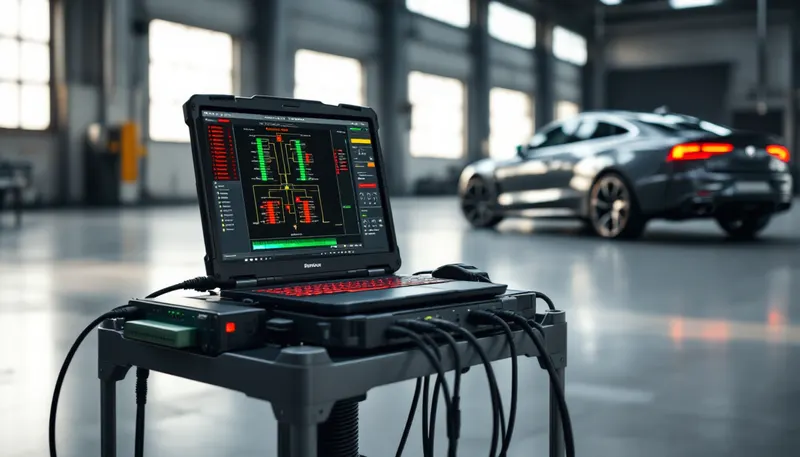
XENTRY Diagnostics
Factory XENTRY scan, guided tests, SCN coding
- Price range
- $149–$229
- Typical time
- 1–1.5 hours

W463 first generation · W463 second generation
The G-Wagen is a ladder-frame truck with a luxury interior bolted on top, and its repairs split the same way: locking differentials, a transfer case and solid-axle hardware on one side, M273, M157 and M176 engine work and body electronics on the other. We work on both halves of the W463, first and second generation.
Repairs covered by a 2-year/24,000-mile warranty, independent shop
Generations
W463 first generation
1990–2018
Solid axles front and rear, three locking differentials, recirculating-ball steering; US models from 2002 with the M113 V8, M273 from 2009, M157 in the G63, M176 in the 2016–2018 G550.
W463 second generation
2019–
New ladder frame with independent double-wishbone front suspension, electric rack steering, M176 V8 in the G550, M177 in the G63, 9G-Tronic; the three locks remain.
Known failures
Problem
W463 first generation, 2002–2018: Differential lock lights flash and never go solid, or a lock engages and will not release
Likely cause
The electric lock actuators on the axles bind, their position switches fail, and on older trucks the vacuum lines to the front axle disconnect crack
The fix
Test actuator current and switch state in XENTRY, free or replace the actuator, repair the wiring at the axle, verify all three locks engage and release on the lift
XENTRY DiagnosticsProblem
W463 first generation, 2002–2018: Clunk on take-off, low-range will not engage, 4ETS warning on the dash
Likely cause
Transfer case shift motor and its position sensor fail, the chain stretches, and the output flanges weep oil until the case runs low
The fix
Shift motor or sensor replacement with the guided test, transfer case fluid, flange seals, chain assessment where the noise suggests it
XENTRY DiagnosticsProblem
G500 and G550 with M273, 2009–2015: Oil on the skid plates, oil smell, correlation codes on early engines
Likely cause
M273 valve cover gaskets, cam adjuster magnet seals and the oil filter housing gasket leak; early M273 idler gear wear on some engines
The fix
Reseal the confirmed source; verify the engine serial and cam deviation before any idler gear discussion
M272/M273 Oil Leak RepairProblem
G63 AMG with M157, 2013–2018: Oil consumption between services, blue smoke on cold start, turbo whistle changes
Likely cause
Turbocharger seals and the M157 breather system allow oil past, and the hot-side oil lines weep onto the turbos
The fix
Consumption test, turbo shaft play and seal check, breather and line reseal, oil line replacement where cooked
M272/M273 Oil Leak RepairProblem
W463 with 722.9, 2007–2018: Harsh 1-2 shift, limp mode after a hot stop, delayed reverse
Likely cause
The 722.9 conductor plate speed sensors age, and the heavy truck runs the fluid hot
The fix
Conductor plate with coding or the complete valve body, fluid and filter, adaptation drive
722.9 7G-Tronic Transmission Service and RepairProblem
W463 first generation, all years: Bubbling paint at the door hinges, tailgate hinge and spare carrier, rust under the rear bumper and around the windshield frame
Likely cause
Hand-assembled steel body with seams and bolted hinges; moisture collects at the hinge pockets and the windshield channel
The fix
Inspection at every service, early treatment of the hinge and seam points before the steel perforates, referral for body repair where it has
Service BProblem
W463 second generation, 2019–: Battery warning, stall at a stop, electric steering assist warning on G550 and G63
Likely cause
The M176 and M177 48-volt starter-generator and the 48-volt supply to the electric power steering and auxiliary systems drop out
The fix
XENTRY quick test of the 48-volt network, component replacement with VIN coding, software release check
XENTRY DiagnosticsThe three locking differentials are the defining feature of the W463 and the most common electrical complaint. The dash switches request a lock, an actuator on the axle moves a fork into the differential, and a position switch tells the control unit the lock is in. When any part of that chain fails the switch light flashes and the lock never confirms, or worse, a lock confirms and refuses to release.
On trucks from the 1990s and early 2000s the front axle disconnect is vacuum-operated and the lines crack where they run along the frame. From the mid-2000s the actuators are electric, and they bind from sitting unused; many Dallas G-Wagens never engage a lock in years. The actuator motor draws high current, the switch contacts corrode and the harness at the axle chafes.
The fix starts on the lift with XENTRY showing actuator current and switch state while the lock is commanded. A bound actuator can sometimes be freed and resealed; a failed one is replaced. We cycle all three locks in order, since the center must engage before the rear and front will, and verify release before the truck leaves.
The W463 transfer case is a chain-driven unit with a selectable low range and the center lock, and it has three weak points: the shift motor and its position sensor, the output flange seals and the chain. A G500 that clunks on take-off or refuses low range usually has a shift motor or sensor fault, and the guided test in XENTRY isolates it from the lock circuit.
Flange seals weep oil slowly and nobody notices until the case runs low and the chain starts to slap, which is why transfer case fluid level is on our inspection list at every service. Driveshaft flex discs and center bearings also age in this heat, and a vibration at highway speed on I-30 is more often a flex disc than a tire balance on this truck.
The solid axles carry their own list: differential pinion seals, wheel bearing hubs and the steering damper and tie rods on the recirculating-ball steering, which wander as the drag link joints wear. The 2019-on truck replaced the front solid axle with independent double wishbones and an electric rack, which transformed the steering and removed most of that list.
The 2002–2008 G500 uses the M113 5.0 V8, a durable engine whose main issues are valve cover and oil filter housing leaks and a crankshaft position sensor that fails hot. The 2009–2015 G550 moved to the M273 5.5, which adds cam adjuster magnet seals and, on early builds, the idler gear wear that we verify by serial number before anyone quotes a timing job.
The G55 AMG runs the supercharged M113K, which asks for its supercharger coupler and intercooler pump to be checked and leaks from the same gaskets as the M113. The G63 from 2013 uses the M157 twin-turbo, and its reputation for oil consumption is earned: turbo seals, breather system and the hot oil lines all contribute. A consumption test comes before any teardown.
The 2016–2018 G550 and every 2019-on truck use the M176 or, in the G63, the M177, both hot-vee biturbo V8s. These run clean when serviced, but spark plugs, the 48-volt system on the second generation and coolant hoses cooked in the vee are the recurring items. We treat an oil leak on any of these as a diagnosis with dye first and parts second.
The first-generation W463 body was assembled largely by hand in Graz and has more seams and bolted-on hinges than any other Mercedes. The door hinge pockets, the tailgate hinges, the spare carrier mounts and the windshield frame collect moisture and bubble from under the paint. The rear bumper mounts and the lower rear quarter seams are next.
Dallas trucks do better than northern ones, but ten years of car washes and the occasional flooded underpass are enough. We look at the known points at every service and photograph them so an owner can see the progression. Caught early, hinge and seam corrosion is a treatment; caught late, it is body work that we refer out.
The second-generation body addressed most of this with different hinge construction and better sealing. It is too early to call its long-term rust points, and the first thing we check on a 2019-on truck is the windshield frame after a glass replacement, since that is where the sealant is disturbed.
Routine service costs the same as any Mercedes V8: Service A and B at the published ranges, with the differential locks cycled and the axle and transfer case fluids on their own schedule. The large bills come from the 722.9 when the conductor plate fails, from engine oil leaks that are expensive because of access, and from the lock actuators and transfer case shift motor.
The 2019-on truck is simpler mechanically up front but more complex electrically, and a 48-volt fault on a G550 or G63 needs the online coding and software access we hold. Every repair listed here is covered for 2 years parts and 2 years labor, up to 24,000 miles, nationwide. For a written range on a specific truck, email service@mercedesbenzrepair.net with the year, engine and what the dash is showing.
Costs
| Service | Price range | Typical time |
|---|---|---|
| XENTRY diagnostics (locks, transfer case, 48-volt) | $149–$229 | 1–1.5 hours |
| 722.9 conductor plate with coding | $1,300–$2,200 | 3–5 hours |
| 722.9 fluid and filter service | $350–$550 | 2 hours |
| Valve cover gaskets, M273 or M157 (pair) | $550–$950 | 3–5 hours |
| Oil filter housing gasket | $400–$700 | 2–3 hours |
| Service A | $189–$329 | 1–1.5 hours |
| Service B | $349–$649 | 2–3 hours |
Independent-shop ranges for Dallas. Differential lock actuators, transfer case shift motors and axle work are quoted after the XENTRY test, since the price depends on whether the actuator frees or must be replaced and whether the wiring at the axle has failed with it.
How booking works
Covered for 2 years parts and 2 years labor, up to 24,000 miles, nationwide
Questions
A flashing light means the control unit commanded the lock but the position switch never confirmed engagement. On a truck that rarely uses its locks the actuator has usually seized from sitting, though a corroded switch or chafed axle harness gives the same symptom. We test it live on the lift and often free and reseal the actuator rather than replace it.
Some consumption on the M157 is expected, but a quart every thousand miles is not. The turbo seals, the breather system and the hot-side oil lines are the usual contributors, and a measured consumption test over a set mileage tells us whether it is within tolerance before anything is opened. Blue smoke on cold start points to the turbos specifically.
Only at the rear. The second-generation W463 moved to independent double-wishbone front suspension with an electric steering rack, which is why it tracks straight and steers lightly compared to the old truck. The rear solid axle and all three differential locks remain. It also adds a 48-volt network that needs online XENTRY access to service.
Heat. The 722.9 conductor plate speed sensors drift as the fluid temperature climbs, and a heavy, boxy truck idling on US-75 in July gets there quickly. A harsh 1-2 shift or limp mode that clears after cooling points to the conductor plate. We confirm the stored sensor code and replace the plate with coding and fresh fluid.
Less than a northern truck, but the hinge pockets, tailgate hinges and windshield frame on the first-generation body still bubble after years of car washes. We check those points at every service and photograph them. Early treatment keeps it cosmetic; once the steel perforates it becomes body work, which we refer to a shop that does it.
Services
Factory XENTRY scan, guided tests, SCN coding
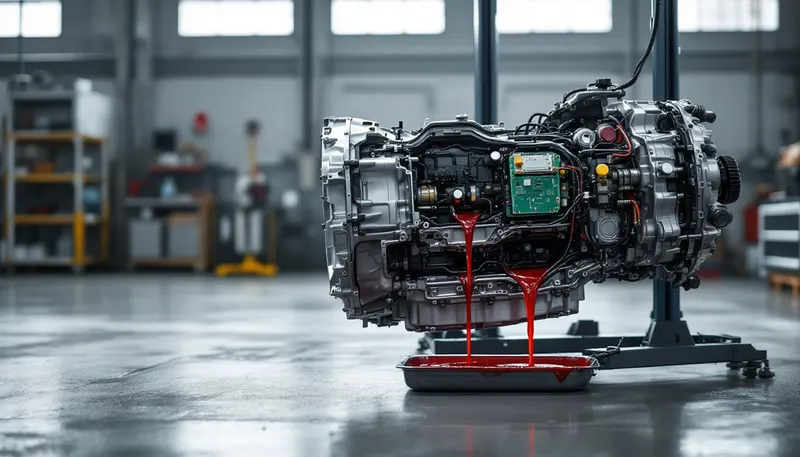
Conductor plate, valve body, fluid service, coding
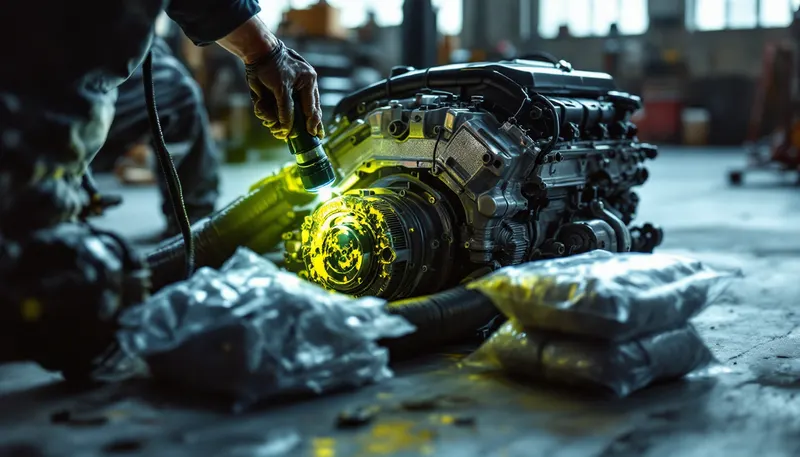
Oil cooler seals, valve covers, cam magnets on M272/M273

R134a/R1234yf recharge, compressor, evaporator, actuators
Bring your G-Class to a specialist
The G-Wagen is a ladder-frame truck with a luxury interior bolted on top, and its repairs split the same way: locking differentials, a transfer case and solid-axle hardware on one side, M273, M157 and M176 engine work and body electronics on the other. We work on both halves of the W463, first and second generation.